
Why Fascia Stretching is a Vital Part of Any Workout Routine
 Nov, 30 2025
Fascia Release Timer
Fascia Release Timer
Fascia requires sustained pressure (3-5 minutes) for effective release. This timer guides your sessions based on activity type and intensity.
Most people think stretching is just about loosening tight muscles. But if you're only targeting your quads, hamstrings, or shoulders, you're missing the real key to movement: your fascia. This invisible web of connective tissue wraps around every muscle, bone, nerve, and organ in your body. When it gets stiff, sticky, or stuck, it doesn’t just limit your range of motion-it pulls your whole system out of alignment. That’s why fascia stretching isn’t just another add-on to your routine. It’s the missing piece that turns good workouts into great ones.
What Fascia Actually Is (And Why It Matters)
Fascia isn’t just padding. It’s a continuous, three-dimensional network made of collagen and elastin fibers. Think of it like shrink-wrap that holds your muscles together, lets them slide against each other, and transmits force across your body. When you do a squat, your glutes don’t work alone. Your thoracolumbar fascia connects them to your lower back and even your opposite shoulder. If that fascia is tight, your squat becomes shallow, your back aches, and your hips feel locked.
Studies show that fascia can account for up to 30% of total muscle resistance during movement. That means if your fascia is stiff, you’re fighting your own body just to get into position. And over time, that leads to compensation patterns-your neck strains to make up for tight hips, your knees cave in because your calves won’t release. These aren’t just minor annoyances. They’re injury waiting to happen.
How Fascia Gets Stuck
Fascia loves movement. It thrives on change. But modern life-sitting at desks, scrolling on phones, driving for hours-tells fascia to stay in one position. The result? It starts to glue itself together. Dehydration, inflammation, and repetitive motions make it worse. You might notice this after a long flight, a weekend of gardening, or even just after a week of skipping mobility work.
Unlike muscles, which bounce back quickly after a good stretch, fascia responds slowly. It doesn’t loosen with a quick 10-second hold. It needs sustained pressure, slow movement, and time. That’s why regular static stretching doesn’t fix it. You need to target the tissue differently.
Fascia Stretching vs. Regular Stretching
Regular stretching pulls on muscle fibers. Fascia stretching pulls on the connective tissue that surrounds and connects those fibers. The difference shows up in how you move.
Try this: Stand up and touch your toes. If you can’t reach your shins, you might think your hamstrings are tight. But what if it’s not your hamstrings? What if it’s the fascia running from your feet up your back to your skull? That’s the superficial back line-a continuous fascial chain. Stretching just your hamstrings won’t fix it. You need to release the whole line.
Fascia stretching uses:
- Long, slow holds (3-5 minutes)
- Directional movement (not just pulling)
- Bodyweight pressure (not just gravity)
- Breath-guided release
It’s not about how far you can reach. It’s about how much your body lets go.

How to Start Fascia Stretching
You don’t need fancy tools. Just your body and a little patience. Here’s how to begin:
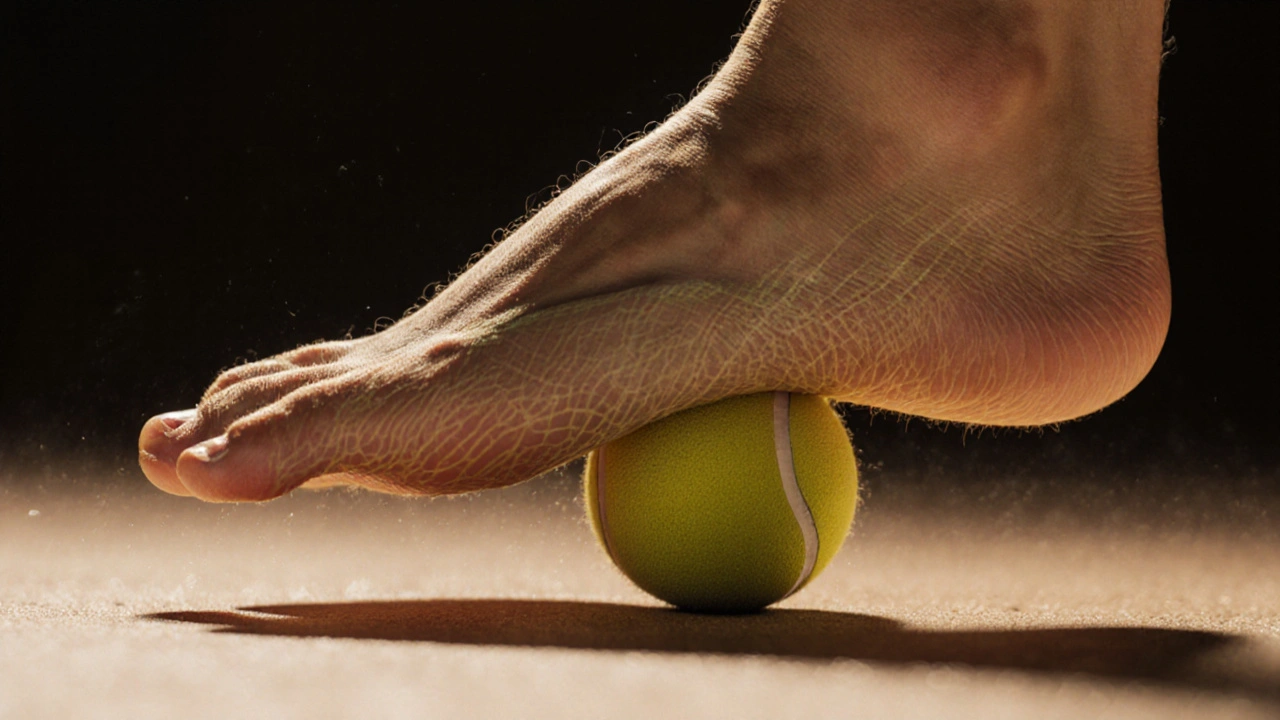
- Start with the feet. Roll a tennis ball under your sole for 2 minutes per foot. Focus on the arch, not just the heel. This unlocks the entire posterior chain.
- Use a foam roller on your back. Lie on your back with the roller under your shoulder blades. Slowly roll up and down, pausing on tender spots. Breathe into them. Don’t rush. Let your body melt.
- Try the thread-the-needle stretch. On all fours, slide one arm under the other, lower your shoulder to the floor, and let your chest sink. Hold for 3 minutes. This opens the thoracic fascia and relieves shoulder and neck tension.
- Do a seated forward fold with bent knees. Don’t force it. Let your spine lengthen slowly. After 90 seconds, gently rock side to side. This releases the lumbar and sacral fascia.
- End with a deep diaphragmatic breath. Inhale for 4 counts, hold for 4, exhale for 6. Repeat 5 times. Breath tells fascia it’s safe to relax.
Do this sequence 3 times a week, right after your workout or on rest days. You’ll feel it in your hips first. Then your lower back. Then your shoulders. It’s not magic. It’s mechanics.
Why Athletes and Trainers Are Switching to Fascia Work
Professional athletes don’t stretch just to look flexible. They stretch to move better, recover faster, and stay injury-free. The Golden State Warriors have a dedicated fascia therapist on staff. UFC fighters use myofascial release before and after fights. Even marathon runners now roll out their plantar fascia before long runs.
Why? Because they’ve seen the results. One study from the University of Vienna found that athletes who added 15 minutes of fascia rolling to their routine improved hip mobility by 22% in just 4 weeks. Another showed a 31% reduction in delayed onset muscle soreness (DOMS) after 6 weeks of consistent fascia work.
It’s not about being the most flexible person in the room. It’s about moving without pain, without compensation, without limits.
Common Mistakes People Make
Fascia stretching isn’t hard. But people mess it up in predictable ways:
- Rolling too fast. You’re not massaging a muscle-you’re releasing a web. Speed creates pressure, not release.
- Skipping breath. Holding your breath tells your nervous system to tighten up. Breathe deep, slow, and full.
- Only stretching after workouts. Fascia needs daily attention. Even 5 minutes in the morning makes a difference.
- Chasing pain. Discomfort is fine. Sharp pain means you’re hitting a nerve or inflamed tissue. Back off.
- Ignoring hydration. Fascia is 70% water. If you’re dehydrated, it’s like trying to stretch dried-out rubber. Drink water before and after.

When to Skip Fascia Stretching
There are times when you should pause. If you have:
- An acute injury (like a torn muscle or sprain)
- Recent surgery in the area
- Severe osteoporosis or connective tissue disorders
- Open wounds or skin infections
Always check with a physical therapist if you’re unsure. But for most people-whether you’re 20 or 60-fascia stretching is not just safe. It’s essential.
What Happens When You Stick With It
After 4 weeks of consistent fascia stretching, people report the same things:
- They can squat deeper without rounding their back
- They no longer wake up with stiff shoulders
- Running feels easier, even on hills
- They sleep better
- They feel lighter, like they’ve lost weight-even though the scale hasn’t changed
That’s because fascia doesn’t just affect movement. It affects how your body feels in space. When it’s free, your posture improves. Your breathing deepens. Your energy shifts. It’s not just physical. It’s emotional. Tight fascia holds stress. When you release it, you release tension you didn’t even know you were carrying.
Is fascia stretching the same as foam rolling?
Foam rolling is one tool for fascia stretching, but not the whole picture. Rolling applies pressure to break up adhesions. True fascia stretching involves slow, sustained movement and breath to encourage the tissue to rehydrate and realign. Think of rolling as clearing debris, and stretching as rebuilding the structure.
How long should each fascia stretch last?
Hold each stretch for at least 3 minutes. Fascia responds to sustained load, not quick tugs. You might feel intense discomfort at first, but after 60-90 seconds, it should start to soften. That’s when real release begins. Don’t rush it.
Can I do fascia stretching every day?
Yes. Unlike muscle stretching, fascia work doesn’t cause microtears. Daily 10-15 minute sessions are ideal. Morning sessions help with mobility, evening sessions help with recovery. Consistency matters more than intensity.
Do I need special equipment?
No. A tennis ball, foam roller, or even a towel can work. Your body weight is your best tool. You don’t need expensive gadgets-just time and attention.
Will fascia stretching help my back pain?
Often, yes. Most chronic back pain comes from tight fascia in the lower back, hips, or hamstrings pulling on the spine. Releasing the superficial back line can take pressure off the discs and nerves. Many people see relief in just a few sessions.
Next Steps
Start small. Pick one area-your feet or your upper back-and spend 5 minutes a day on it for a week. Notice how you move differently by the end of the week. Then add another. Don’t try to fix everything at once. Fascia doesn’t work that way. It’s a slow unraveling.
If you’re serious about movement, recovery, and longevity, you can’t ignore your fascia. It’s not a trend. It’s biology. And your body already knows it.