
Unveiling the Magic of Cupping Therapy: How It Works and What It Really Does
 Feb, 10 2026
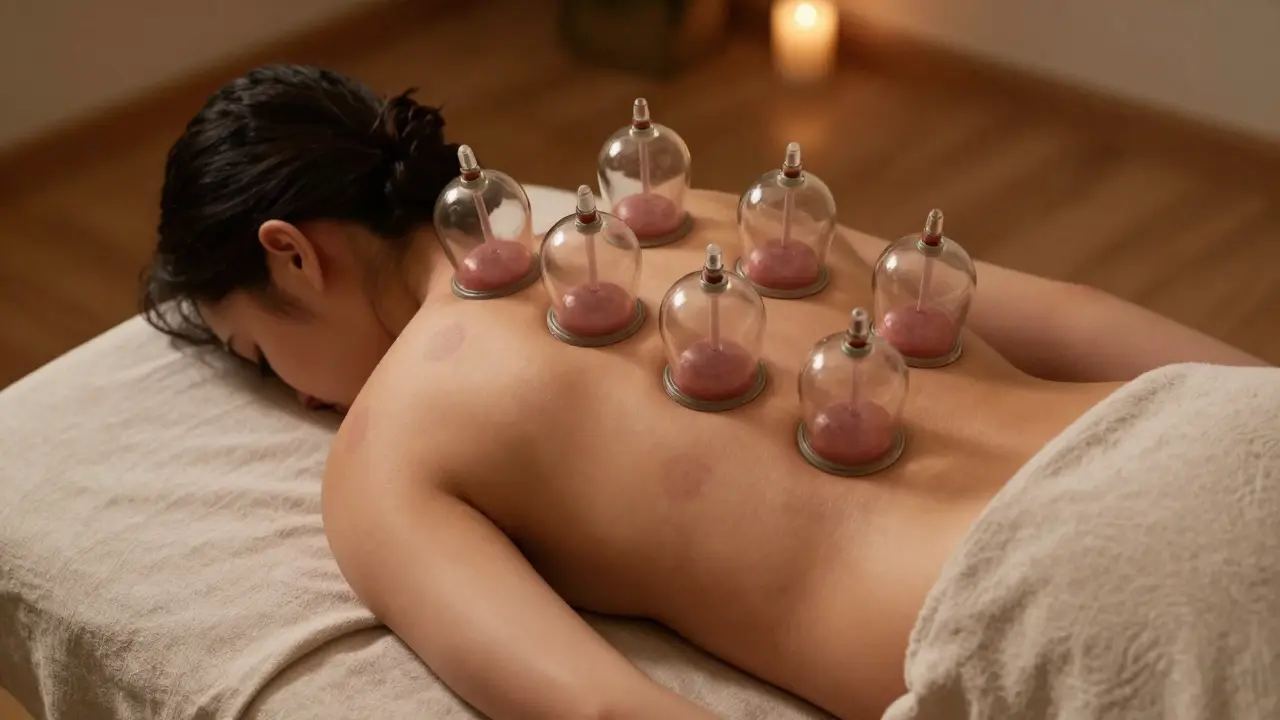
Ever seen someone with dark circular marks on their back and wondered what happened? Those aren’t bruises from a bad fall-they’re the signature of cupping therapy, an ancient healing practice that’s making a serious comeback in modern wellness circles. Unlike massages or acupuncture, cupping doesn’t poke or press. It pulls. And that simple act of suction is changing how people think about pain, recovery, and circulation.
What Exactly Is Cupping Therapy?
Cupping therapy involves placing special cups-usually made of glass, silicone, or bamboo-on the skin and creating a vacuum inside them. This suction lifts the skin and underlying tissue, drawing blood to the surface. It’s been used for thousands of years across cultures: in ancient Egypt, it was documented in the Ebers Papyrus (1550 BCE); in China, it’s been part of Traditional Chinese Medicine since at least 300 BCE; and in the Middle East, it’s known as hijama and often combined with small incisions.
Today, there are two main types: dry cupping and wet cupping. Dry cupping uses suction only. Wet cupping includes controlled, minor skin punctures to draw out a small amount of blood after the suction. Most modern clinics and spas offer dry cupping because it’s simpler, safer, and doesn’t require medical training.
How Does It Work? The Science Behind the Suction
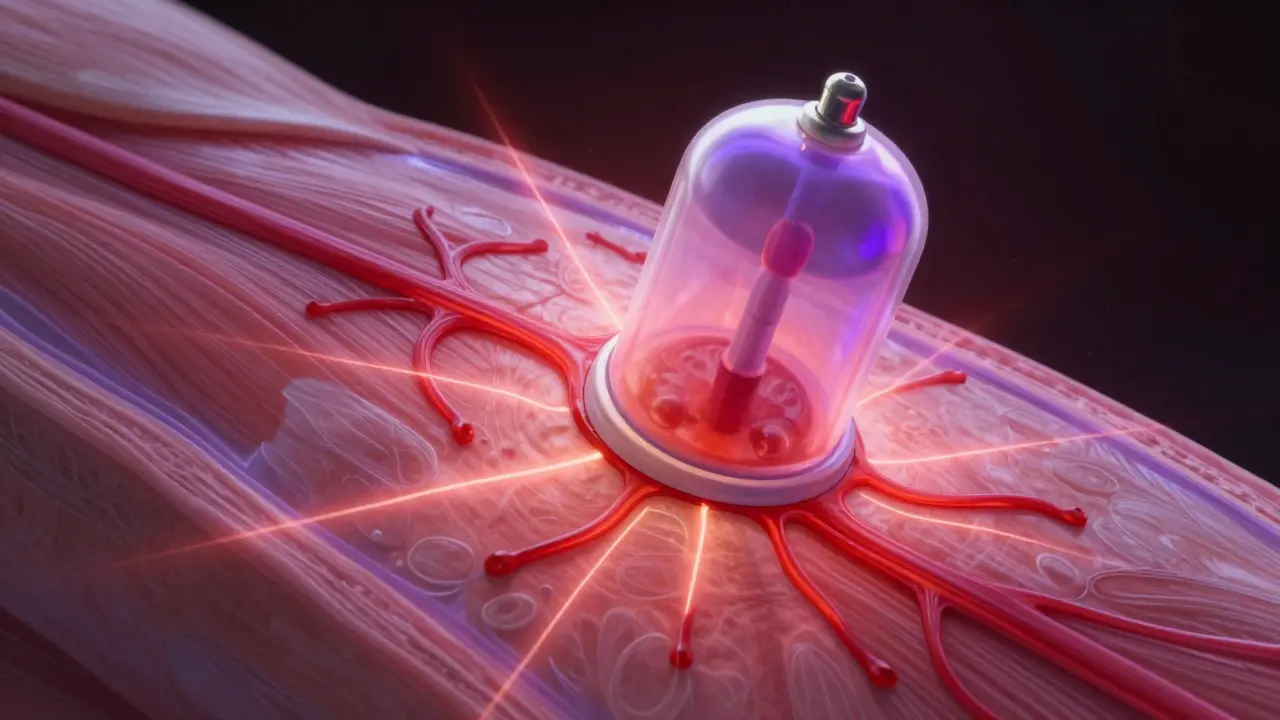
It’s not magic-it’s physics and physiology. When the cup pulls the skin upward, it creates negative pressure. That pressure stretches connective tissue, opens capillaries, and increases local blood flow. Studies using Doppler ultrasound have shown that cupping can increase microcirculation by up to 40% in treated areas within minutes.
This surge in blood flow brings oxygen and nutrients to tired muscles and flushes out metabolic waste like lactic acid. That’s why athletes use it to recover faster. A 2022 study in the Journal of Bodywork and Movement Therapies found that cupping reduced muscle soreness by 37% in athletes after intense training compared to those who only stretched.
But it’s not just about blood. The suction also stimulates nerve endings in the skin, which sends signals to the brain that can override pain messages. It’s like hitting a reset button on your nervous system. That’s why people with chronic lower back pain, neck tension, or even migraines report relief after just one session.
What Do the Marks Mean? (And Why You Shouldn’t Panic)
The dark circles left behind are the most talked-about-and often misunderstood-part of cupping. They’re not bruises. Bruises form when blood vessels rupture under trauma. Cupping marks appear because blood is drawn to the surface, not crushed. The color tells you something: light pink means mild stagnation; deep purple or black suggests more built-up tension or toxins in the area.
These marks usually fade in 3 to 10 days. They’re not painful, and they don’t damage the skin. In fact, they’re often seen as a good sign-proof that the therapy reached deep into the tissue. But if you’re worried about appearance, you can avoid visible areas like the face or wrists. Most people get cupping on the back, shoulders, or thighs where marks are less noticeable.
Who Uses Cupping Therapy-and Why?
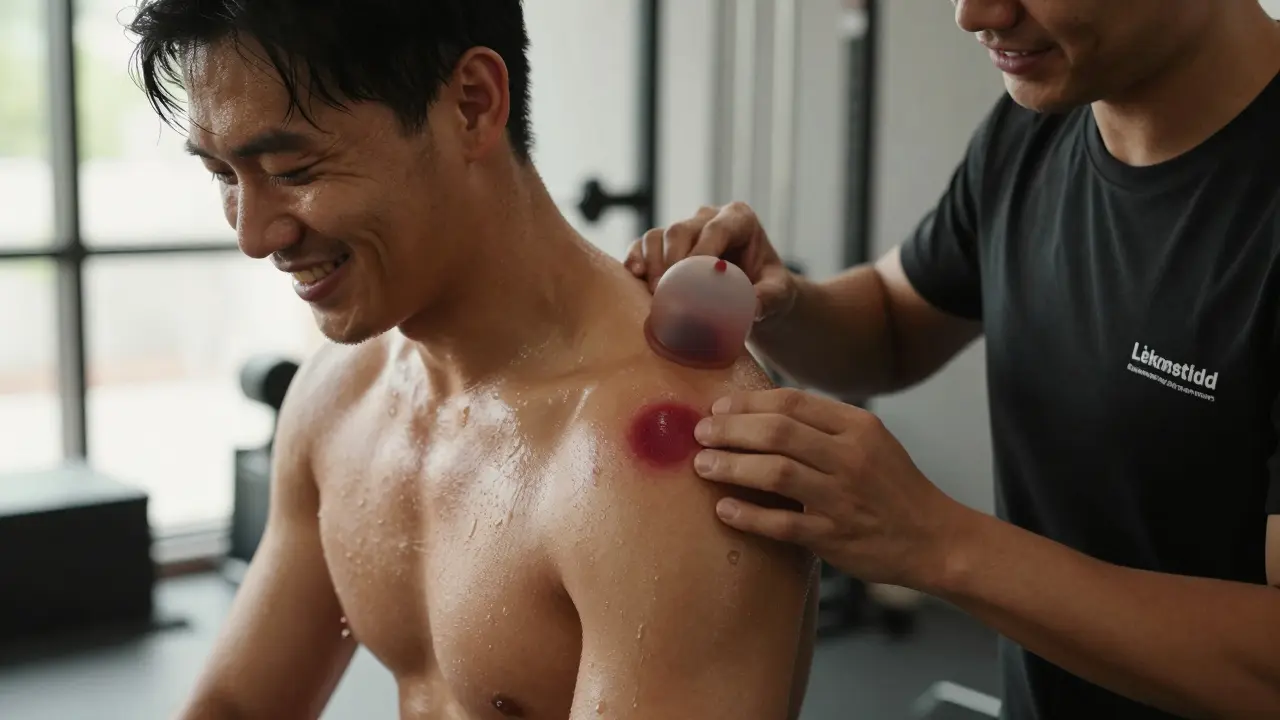
Cupping isn’t just for holistic healers. Elite athletes like Michael Phelps and Gigi Dolin have used it to speed up recovery. NFL, NBA, and Olympic teams now have licensed therapists on staff who use cupping as part of regular training routines.
But you don’t need to be an Olympian to benefit. People with these conditions commonly turn to cupping:
- Chronic muscle tightness or stiffness
- Arthritis and joint pain
- Stress and anxiety (it activates the parasympathetic nervous system)
- Respiratory issues like bronchitis or congestion (cupping on the upper back helps loosen mucus)
- Digestive problems (abdominal cupping can stimulate gut motility)
A 2023 survey of 1,200 adults who tried cupping found that 78% reported noticeable pain reduction after one session, and 65% said they felt more relaxed for days afterward.
Is Cupping Safe? What You Need to Know
Cupping is low-risk when done by a trained professional. But it’s not for everyone. Avoid it if you:
- Have bleeding disorders or take blood thinners
- Have open wounds, burns, or active skin infections
- Are pregnant (especially on the abdomen or lower back)
- Have severe osteoporosis
Side effects are rare but can include mild dizziness, temporary nausea, or skin irritation. Most people feel relaxed or even sleepy after a session-like a deep massage. Don’t plan to lift heavy weights or take a cold shower right after. Your body is still adjusting.
Always choose a certified practitioner. Look for someone trained in either Traditional Chinese Medicine, integrative therapy, or physical therapy with cupping certification. Avoid unlicensed “spa” workers who offer it as a quick add-on without discussing your health history.
How to Try It: What to Expect in Your First Session
Your first cupping session usually lasts 30 to 45 minutes. Here’s what happens:
- You’ll lie down, usually on your stomach or back.
- The therapist cleans the skin and may apply oil to help the cups glide.
- Cups are placed on targeted areas-commonly the back, shoulders, or legs.
- A hand pump or heat is used to create suction. You’ll feel a strong pulling sensation, like a deep tugging, but it shouldn’t hurt.
- Cups stay in place for 5 to 15 minutes. Some therapists move them around in a gliding motion (called “sliding cupping”).
- Cups are removed gently. You may feel a slight tingling as circulation returns.
Afterward, you’ll be advised to drink water, avoid alcohol or caffeine for a few hours, and keep the area warm. No need to cover the marks-they’re not wounds.
Cupping vs. Other Therapies: Where It Fits
Cupping doesn’t replace physical therapy or chiropractic care. But it works well alongside them. Here’s how it compares:
| Therapy | How It Works | Best For | Session Duration |
|---|---|---|---|
| Cupping Therapy | Uses suction to pull tissue upward | Relieving muscle tension, improving circulation | 30-45 minutes |
| Massage | Presses and kneads tissue | General relaxation, surface muscle release | 60 minutes |
| Acupuncture | Inserts fine needles into energy points | Chronic pain, hormonal balance, stress | 45-60 minutes |
| Myofascial Release | Applies sustained pressure to connective tissue | Deep tissue adhesions, scar tissue | 60 minutes |
Think of cupping as a deep-tissue reset. It doesn’t fix structural issues like a misaligned spine. But it can loosen the tight muscles that make those issues worse.
Can You Do It at Home?
Silicone cupping kits are sold online for under $20. Some people use them successfully for minor tension. But there’s a reason professionals use glass or medical-grade cups: they create consistent, controlled suction. DIY cupping can lead to uneven pressure, skin damage, or even burns if you use heat-based methods.
If you’re curious, try a silicone cup on your forearm or calf-never on your spine, neck, or abdomen. Limit sessions to 5 minutes. If you feel sharp pain, stop immediately.
For real results, see a pro. One session every 2-4 weeks is enough for most people. Too much can overstimulate the area and cause bruising or inflammation.
Why Cupping Is More Than Just a Trend
Cupping isn’t new. It’s been around for millennia because it works. Modern science is finally catching up to what ancient healers knew: the body heals better when blood flows freely, nerves calm down, and tension releases. It’s not a cure-all. But for chronic pain, stress, or sluggish recovery, it’s one of the few therapies that delivers noticeable results without drugs or surgery.
Next time you see someone with cupping marks, don’t assume they’re injured. They might just be smarter than you think.
Are cupping marks dangerous?
No, cupping marks are not dangerous. They’re not bruises or injuries-they’re areas where blood has been drawn to the surface due to suction. They typically fade within a few days to a week and don’t cause pain or scarring. If marks last longer than 10 days or are accompanied by swelling, warmth, or pain, consult a doctor.
Does cupping therapy help with weight loss?
No, cupping therapy does not cause weight loss. Some clinics claim it "releases toxins" or "boosts metabolism," but there’s no scientific evidence to support this. Weight loss requires calorie control and physical activity. Cupping may reduce bloating or water retention temporarily, but it doesn’t burn fat.
How often should you get cupping therapy?
For general wellness or muscle tension, once every 2-4 weeks is ideal. Athletes or people with chronic pain may benefit from weekly sessions for a few weeks, then taper off. Never do cupping more than twice a week on the same area-your skin and tissue need time to recover.
Can cupping therapy help with anxiety?
Yes, many people report feeling calmer after cupping. The therapy stimulates the parasympathetic nervous system-the part of your body that triggers "rest and digest" responses. This can lower heart rate and reduce cortisol levels. A 2021 study in the Journal of Alternative and Complementary Medicine found that participants who received cupping on the back and shoulders reported significantly lower anxiety scores after four sessions.
Is wet cupping better than dry cupping?
Wet cupping includes small skin incisions to draw blood and is used in traditional Islamic and Chinese medicine. It’s more invasive and requires strict sterilization. Dry cupping is safer, widely available, and just as effective for pain relief and circulation. Unless you’re following a specific cultural or medical tradition, dry cupping is the better choice for most people.