
The Power of Kahuna: What You Need to Know
 May, 19 2026
Have you ever felt a touch that seemed to heal more than just your muscles? That is the promise of Kahuna healing. It is not just a spa treatment. It is an ancient Hawaiian practice that connects body, mind, and spirit. When people talk about the "power of Kahuna," they are often referring to deep tissue work, spiritual cleansing, or energy balancing. But what does it actually mean for someone living in Sydney or anywhere else today?
The word "Kahuna" itself means expert, priest, or master in the Hawaiian language. Historically, Kahunas were the respected leaders in their communities. They handled everything from navigation and warfare to medicine and spirituality. Today, when we see "Kahuna" on a menu at a wellness center, it usually refers to a specific style of massage or holistic therapy. Understanding this distinction helps you get exactly what you need from your session.
What Is Kahuna Healing Really About?
To understand the power of Kahuna, you have to look past the modern spa labels. In traditional Hawaiian culture, a Kahuna Lapaau is a healer who uses plants, prayers, and physical manipulation to restore balance. This is different from a standard Swedish massage. A Swedish massage focuses on relaxation and blood flow. Kahuna healing aims to remove blockages in your energy system, known as mana.
Think of it like clearing a clogged pipe. If water cannot flow, the garden dies. Similarly, if your energy is blocked, you feel pain or stress. The Kahuna identifies these blocks and works to release them. This process often involves long, flowing strokes, deep pressure, and sometimes chanting or prayer. It is a full-body experience that targets the root cause of discomfort, not just the symptoms.
Many people confuse Kahuna healing with general "Hawaiian massage." While all Kahuna healing comes from Hawaii, not all Hawaiian massage is done by a trained Kahuna. True Kahuna healing requires years of apprenticeship under a master. It includes knowledge of herbal remedies, star navigation (for timing treatments), and spiritual protocols. Modern adaptations often simplify this into a relaxing massage, but the core principle remains: restoring harmony between the individual and their environment.
The Role of Lomi Lomi in Kahuna Practice
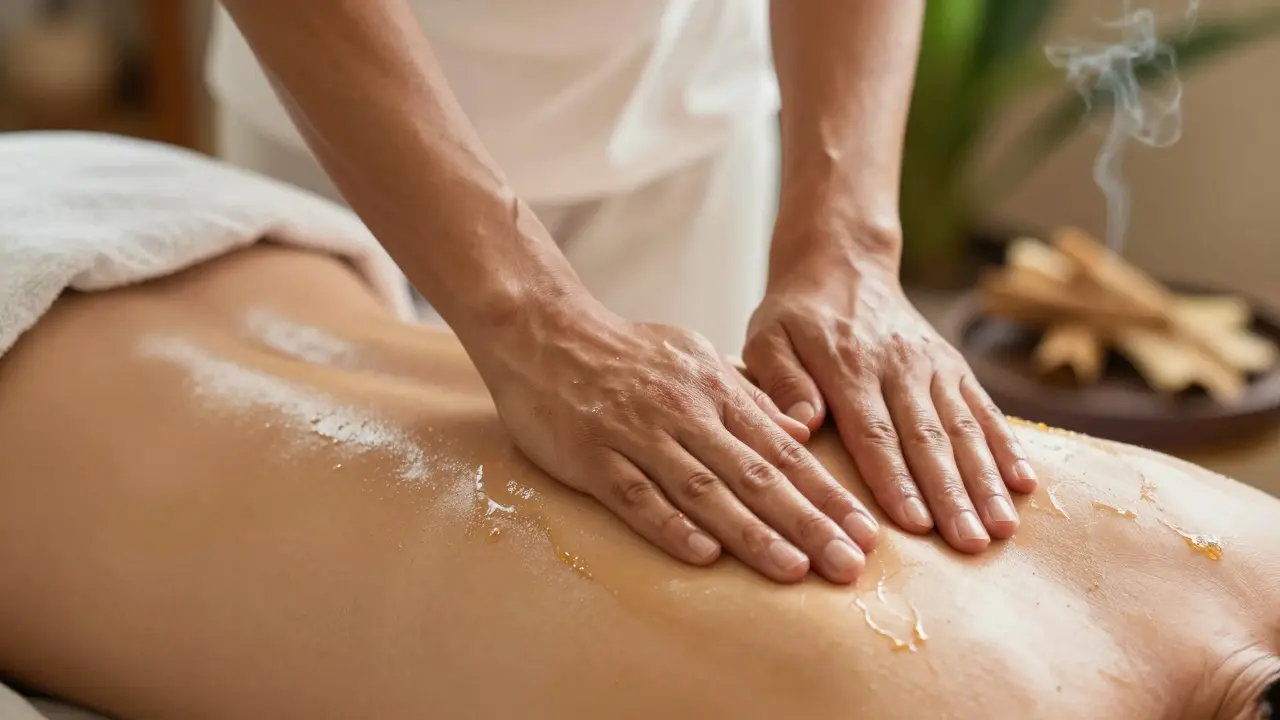
You will often hear the terms "Kahuna" and Lomi Lomi used together. Lomi Lomi is the most famous form of Hawaiian massage, characterized by long, gliding strokes using forearms, elbows, and hands. It is a key component of Kahuna healing, but it is not the whole picture.
Lomi Lomi focuses on releasing tension through rhythm and breath. The therapist moves with you, matching your breathing pattern. This creates a meditative state where your nervous system can downshift from "fight or flight" to "rest and digest." For many clients, this is where the real healing begins. The physical pressure loosens tight muscles, while the rhythmic motion calms the mind.
| Style | Primary Focus | Technique | Spiritual Element |
|---|---|---|---|
| Swedish | Relaxation & Circulation | Light kneading, effleurage | Minimal |
| Deep Tissue | Muscle Knots & Pain | High pressure, slow strokes | None |
| Lomi Lomi | Energy Flow & Relaxation | Forearm sweeps, rhythmic | Moderate |
| Kahuna Healing | Holistic Balance | Combination of Lomi, herbs, prayer | High |
If you are looking for a quick fix for a sore back after gym, deep tissue might be better. But if you want to address chronic stress, anxiety, or a feeling of being "stuck," Lomi Lomi and Kahuna healing offer a deeper layer of support. The difference lies in the intent. One treats the muscle; the other treats the person.
Why Energy Work Matters in Modern Wellness
In our fast-paced world, we often ignore the connection between our emotions and our physical health. We take pills for headaches or stretches for stiff shoulders. We rarely ask why we are holding so much tension in the first place. This is where the power of Kahuna shines. It addresses the emotional residue stored in the body.
Research in psychoneuroimmunology shows that stress hormones like cortisol can weaken the immune system and cause inflammation. By reducing stress through calming touch and intention, practices like Kahuna healing can lower cortisol levels. This isn't just woo-woo magic; it's biology. Your body responds to safety and care. When a practitioner sends positive intentions, your brain registers this as a safe signal, allowing your body to repair itself.
Consider the concept of mana, or life force. In Western terms, this is similar to bioelectricity or cellular vitality. When your mana is strong, you feel energetic and resilient. When it is depleted, you feel drained and prone to illness. Kahuna healing seeks to replenish this energy. It doesn't just push toxins out; it invites vitality back in. This shift in perspective-from fixing damage to nurturing life-is powerful for long-term wellness.
How to Find Authentic Kahuna Practitioners
Not every therapist calling themselves a "Kahuna" has undergone traditional training. With the rise of holistic tourism, some titles have been diluted. So, how do you find a genuine practitioner? Look for specific credentials and signs of respect for the culture.
First, check their lineage. Did they train under a recognized master in Hawaii? Are they part of a legitimate school that teaches both technique and cultural protocol? Second, observe their approach. Do they discuss your mental and emotional state, or just your physical pain? Authentic Kahuna healing is holistic. It considers your diet, sleep, relationships, and spiritual beliefs.
Also, pay attention to the atmosphere. Traditional sessions may include the use of local oils, such as kukui nut oil, and perhaps the burning of sage or native incense. The space should feel sacred and private. If it feels like a factory line, it probably lacks the spiritual depth that defines true Kahuna work. Ask questions. A good practitioner will be happy to explain their methods and boundaries.
- Ask about their training background and mentors.
- Inquire if they incorporate spiritual elements like prayer or intention setting.
- Check if they use traditional tools or oils.
- Look for reviews that mention emotional release or deep relaxation, not just muscle relief.
Benefits Beyond Physical Relief
While soreness relief is a nice bonus, the real benefits of Kahuna healing go deeper. Many clients report improved sleep quality within days of their first session. Others notice better digestion or clearer thinking. These changes happen because the nervous system is finally allowed to rest.
Emotional release is another common outcome. During a Lomi Lomi session, you might cry unexpectedly. Don't be alarmed. This is your body letting go of old grief or fear. The therapist provides a safe container for this release. Afterward, you often feel lighter and more grounded. This emotional cleansing can improve relationships and reduce anxiety in daily life.
Furthermore, Kahuna healing encourages self-awareness. By paying attention to your body's responses during the session, you learn to listen to your own needs. You start to recognize early signs of stress before they become chronic issues. This proactive approach to health is invaluable. It shifts you from being a passive patient to an active participant in your well-being.
Integrating Kahuna Principles Into Daily Life
You don't need to fly to Hawaii to benefit from Kahuna wisdom. You can integrate its principles into your daily routine. Start by practicing mindful movement. Pay attention to how your body feels as you walk, stretch, or sit. Notice where you hold tension. Breathe into those areas.
Connect with nature. The Kahuna tradition emphasizes the link between humans and the earth. Spend time outdoors without your phone. Feel the sun on your skin, the wind on your face. This simple act recharges your mana. Eat locally sourced foods when possible. Nourishing your body with clean, natural ingredients supports your energy levels.
Finally, cultivate gratitude. In Hawaiian culture, giving thanks is essential. Take a moment each day to acknowledge what you are grateful for. This positive focus shifts your energy from scarcity to abundance. Over time, these small habits build resilience and peace. They keep the power of Kahuna alive in your everyday life.
Is Kahuna massage painful?
It depends on the type. Lomi Lomi is generally gentle and rhythmic, focusing on relaxation. However, some Kahuna healing techniques may involve deep pressure to release stubborn knots. Communicate with your therapist about your comfort level. Pain should never be sharp or unbearable; it should feel like a "good hurt" that leads to relief.
How often should I receive Kahuna healing?
For acute issues, weekly sessions for four to six weeks can provide significant relief. For maintenance and stress management, monthly sessions are often sufficient. Listen to your body. If you feel drained or tense, schedule a session. There is no strict rule, as everyone's energy needs differ.
Can Kahuna healing help with chronic pain?
Yes, many people find relief from chronic conditions like arthritis, fibromyalgia, and back pain. By addressing both physical tension and emotional stress, Kahuna healing can reduce inflammation and improve mobility. It works best as part of a comprehensive treatment plan that includes medical care, exercise, and nutrition.
What is the difference between a Kahuna and a Shaman?
While both are spiritual healers, their origins and methods differ. A Kahuna is specifically from Hawaiian culture and focuses on restoring balance through physical touch, herbs, and prayer. A Shaman is a term used across many indigenous cultures worldwide, often involving journeying to spirit worlds to retrieve lost souls or diagnose illnesses. Kahuna healing is more grounded in physical bodywork.
Do I need to believe in the spiritual aspects to benefit?
No, you do not need to share the practitioner's beliefs. The physiological effects of deep touch, relaxation, and reduced stress are universal. Even if you view it purely as a therapeutic massage, your body will still respond positively. However, being open to the spiritual elements can enhance the experience and deepen the sense of peace.