
The Esalen Experience: A Journey Beyond Ordinary
 Mar, 8 2026
Most people think of retreats as a chance to unplug, sip tea, and maybe do some yoga. But the Esalen Experience? It doesn’t just unplug you-it rewires you. Tucked into the cliffs above Big Sur, California, the Esalen Institute isn’t a spa, a resort, or even a typical wellness center. It’s a living laboratory for human transformation. Since 1962, it’s been the birthplace of movements that changed how the world thinks about healing, awareness, and personal growth.
What Makes Esalen Different?
You won’t find spa packages or guided meditations on a timer here. Esalen is raw, messy, and deeply personal. It’s where people come not to relax, but to break open. The program isn’t about fixing what’s broken-it’s about discovering what’s been buried under years of routine, fear, and conditioned thinking.
Think of it like this: most wellness programs ask you to do more. Meditate longer. Stretch further. Eat cleaner. Esalen asks you to stop. To sit with the silence. To feel the edges of your own discomfort without rushing to fix it. That’s where the real shift happens.
The institute’s original founders-Michael Murphy and Dick Price-were influenced by Eastern philosophy, Gestalt therapy, and early humanistic psychology. They didn’t want to sell a product. They wanted to create a space where people could meet themselves in ways they never had before. That vision still holds.
The Physical Space: Where the Earth Speaks
The buildings at Esalen are built into the cliffs. Hot springs bubble up beneath the stone baths. The Pacific crashes against the rocks just below. You don’t just visit Esalen-you enter it. The air smells like salt and eucalyptus. The wind carries the sound of waves day and night. It’s impossible to ignore the natural rhythm here.
Many participants describe the hot springs as the first real moment of surrender. Not because the water is hot, but because the act of soaking in it, under the open sky, with strangers who become quiet companions, breaks down the walls we carry. No one talks. No one takes photos. You just feel the heat, the rocks, the sea, and your own breath.
There are no mirrors in the bathhouses. No clocks. No Wi-Fi. The absence of these things isn’t an accident. It’s part of the design. You’re meant to lose track of time. To stop measuring yourself against your phone, your job, your past.
The Work: Encounter Groups and Bodywork
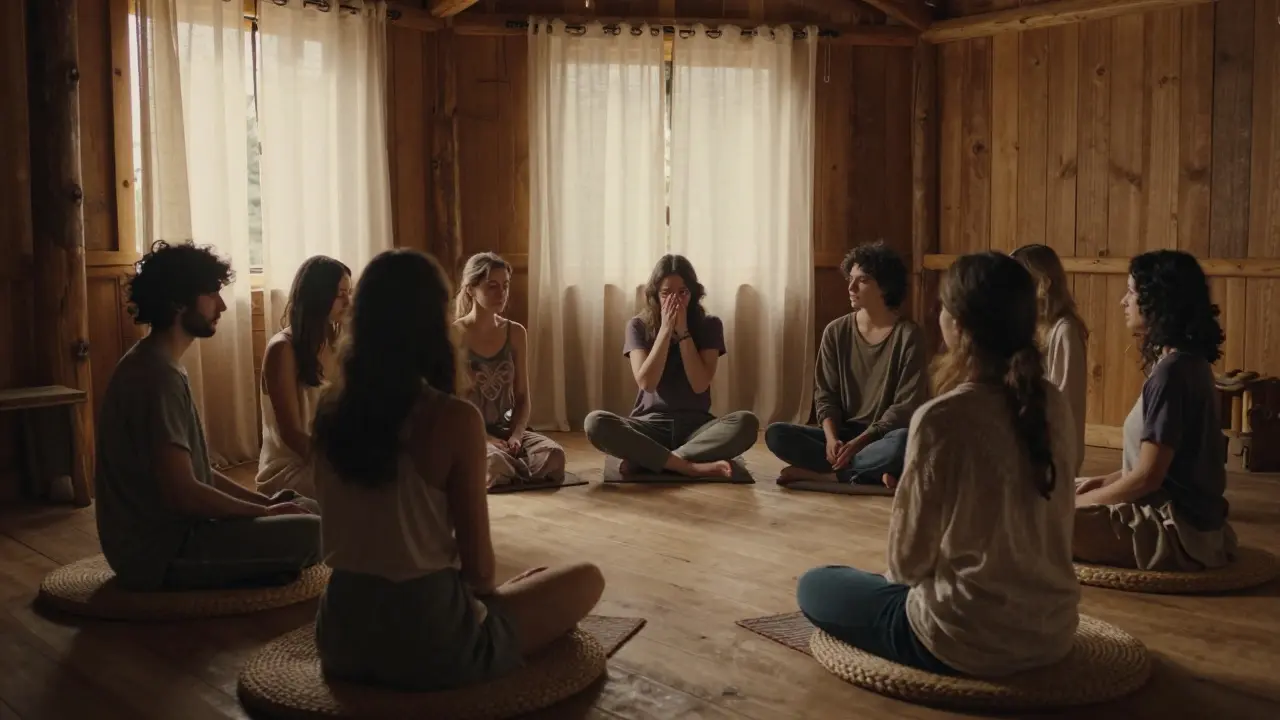
Esalen is famous for its encounter groups-intensive, unstructured sessions where people speak honestly, often for the first time in their lives. These aren’t therapy sessions. They’re raw, emotional, sometimes chaotic gatherings where you’re invited to say what’s true, even if it scares you.
One woman I spoke with, a corporate lawyer from Chicago, said she cried for three hours straight during her first group. She didn’t know why. She just started talking about how she’d spent 15 years pretending she was fine. No one interrupted. No one gave advice. They just listened. That silence, she said, was the first time she’d ever felt heard.
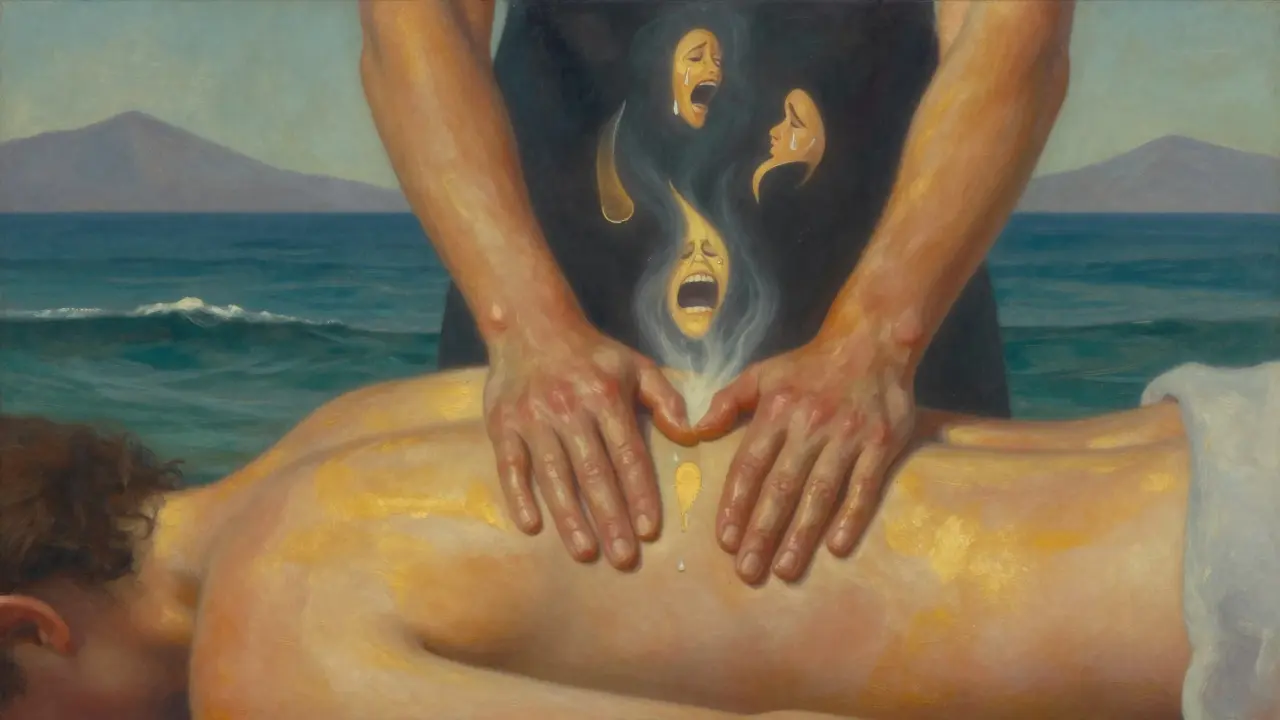
Bodywork is another pillar. Esalen massage isn’t about knots or tension. It’s about presence. Practitioners use long, flowing strokes-not to manipulate the body, but to invite awareness. People often report feeling emotions they hadn’t touched in decades. Grief. Joy. Anger. All rising up, uninvited, and allowed to move through.
The training for Esalen bodyworkers is unlike any other. They study anatomy, yes, but also philosophy, movement, and silence. Their hands don’t just touch skin-they hold space.
Consciousness and the Human Potential Movement
Esalen gave birth to the Human Potential Movement. That’s not a buzzword-it’s a real shift in how we understand what people are capable of. Before Esalen, psychology mostly focused on fixing pathology. Esalen asked: What if we focused on what’s possible?
Thinkers like Abraham Maslow, Carl Rogers, and Alan Watts spent time here. So did poets, dancers, and scientists. They didn’t just lecture. They lived. They cooked together. They argued. They sat in silence. Out of that came new ideas about mindfulness, nonlinear thinking, and the connection between body and mind.
Today, you can still take workshops on somatic experiencing, breathwork, and non-dual awareness. You can sit with a Zen master, learn tai chi from a former monk, or explore psychedelic integration with trained facilitators. The topics change. The intention doesn’t.
Who Comes Here-and Why?
People arrive at Esalen broken, burned out, curious, or lost. Some are CEOs. Others are artists, teachers, nurses, or people who’ve lost someone. One man came after his wife died. He didn’t know what he was looking for. He just knew he couldn’t go back to his old life.
There’s no profile for who ‘should’ come. No requirement to be spiritual. No need to believe in energy fields or chakras. You just need to be willing to show up as you are. That’s it.
And yet, something shifts. Not because of what you do, but because of what you stop doing. You stop performing. You stop explaining. You stop trying to be better.
That’s when the real work begins.
What Happens After You Leave?
People often worry: What if I go back to my life and nothing changes?
Here’s the truth: You don’t come back the same person. But you don’t come back with a new job, a new relationship, or a new purpose. You come back with a new relationship to yourself.
You notice the way you hold your breath when you’re stressed. You pause before reacting. You sit with discomfort instead of distracting yourself. You start asking: Is this mine-or did I just learn to think this way?
That’s the lasting effect. Not transformation as a destination. But transformation as a daily practice.
One participant wrote in her journal: ‘I didn’t find peace at Esalen. I remembered it was always there. I just forgot how to listen.’
Is Esalen for You?
If you’re looking for a quick fix, a weekend of pampering, or a spiritual shortcut-this isn’t for you.
If you’re tired of tools that promise to make you better, faster, or more productive-this might be.
Esalen doesn’t sell outcomes. It offers presence. And presence, over time, changes everything.