
Thai Massage: A Gateway to Enhanced Wellbeing
 Feb, 17 2026
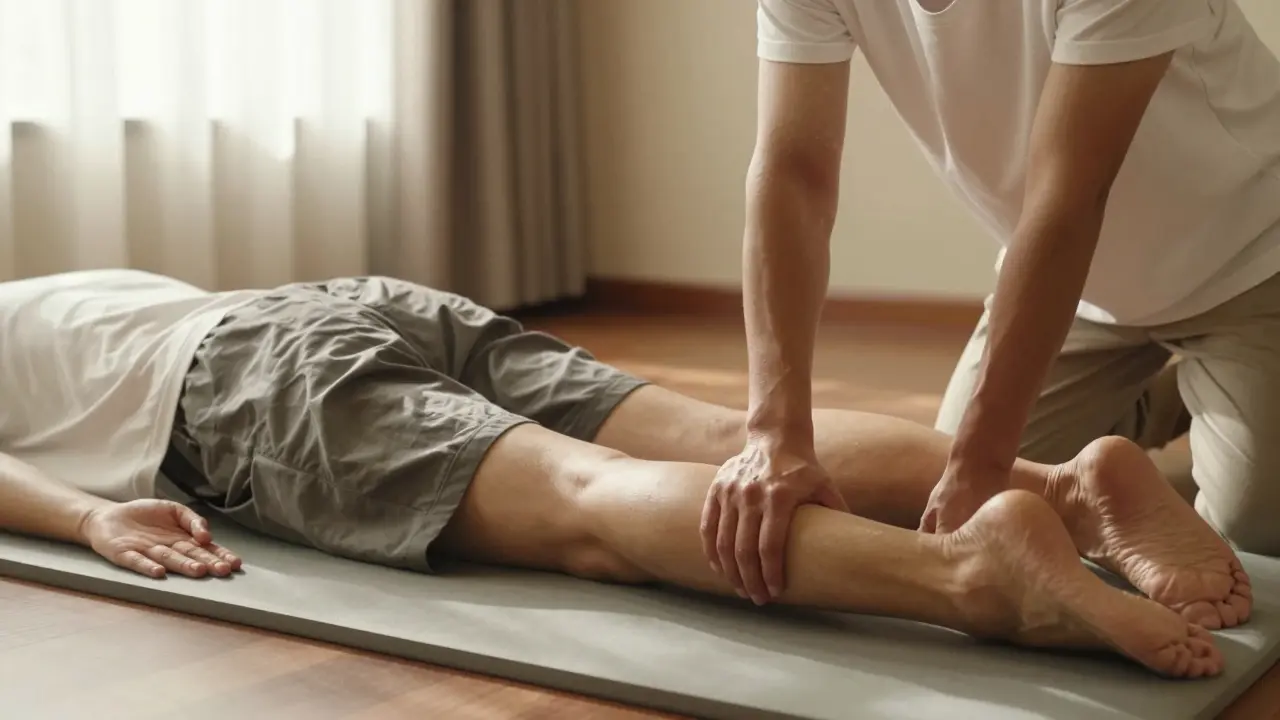
Imagine lying down on a mat, fully clothed, as a therapist uses their hands, thumbs, elbows, and even feet to guide your body through a series of stretches and pressure points. No oils. No music. Just quiet focus and deep, rhythmic movement. This is Thai massage - not just a treatment, but a full-body conversation between giver and receiver.
What Makes Thai Massage Different?
Unlike Swedish or deep tissue massage, Thai massage doesn’t rely on oils or skin-to-skin contact. You stay in loose clothing, and the session takes place on a padded floor mat. The therapist moves you like a living puppet, applying pressure along energy lines and pulling you into yoga-like stretches. It’s sometimes called "yoga for the lazy" because you don’t have to do anything except breathe.
Rooted in ancient Indian Ayurvedic medicine and Chinese meridian theory, Thai massage has been practiced for over 2,500 years. It was developed by Buddhist monks in Thailand who combined physical therapy with spiritual healing. Today, it’s recognized by UNESCO as an Intangible Cultural Heritage - not because it’s pretty, but because it works.
How It Actually Feels
First-time recipients often say they expected something gentle. What they got was intense. The pressure isn’t always soft. It can feel like a deep stretch combined with a chiropractic adjustment - and sometimes, that’s exactly what your body needs.
One woman from Brisbane, who started coming weekly after a car accident, told me: "It felt like someone was peeling off layers of rust from my spine. I didn’t know I was holding that much tension." She’s been coming for three years. Her chronic shoulder pain? Gone.
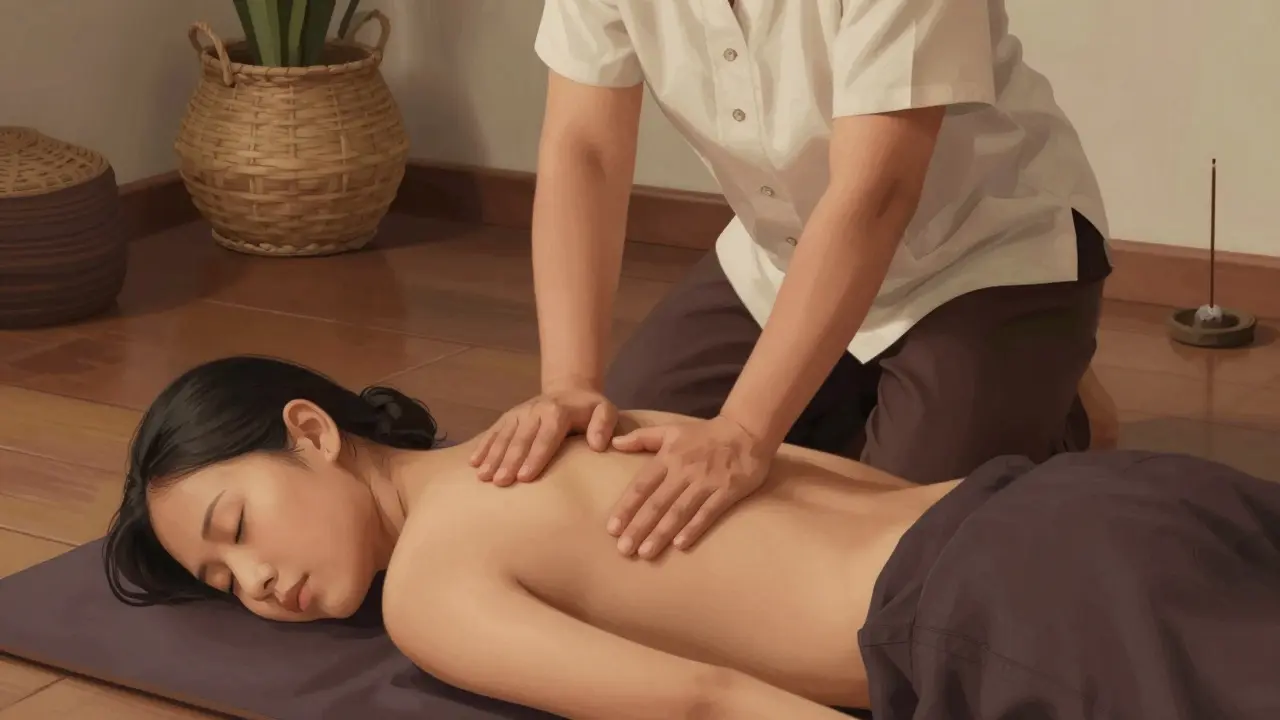
The therapist doesn’t just press. They use their whole body - knees to open hip joints, forearms to compress the back, feet to lengthen the hamstrings. It’s not a passive experience. You’ll feel pulled, pushed, twisted, and released. Some moves might make you grunt. Others might make you laugh. That’s normal.
The Science Behind the Stretch
There’s real data behind why this works. A 2020 study published in the Journal of Bodywork and Movement Therapies tracked 68 people with chronic lower back pain. Half got Thai massage twice a week for six weeks. The other half did nothing. The massage group reported a 42% reduction in pain intensity. Their flexibility improved by 31%. And they slept better.
Why? Thai massage activates the parasympathetic nervous system - the part of your brain that says, "It’s safe to relax." This lowers cortisol, slows your heart rate, and increases blood flow to tight muscles. The stretching also breaks up fascial adhesions - the sticky, stiff layers between muscles that cause stiffness and pain.
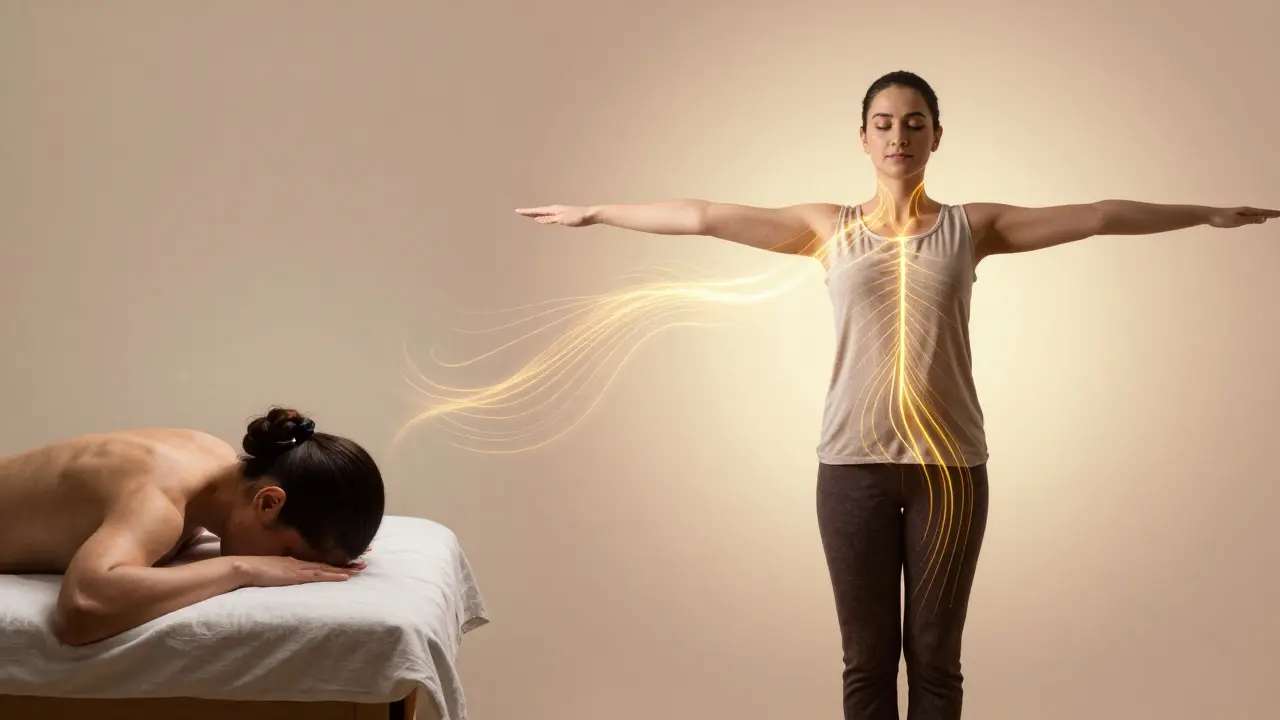
And it’s not just about muscles. Thai massage follows ten major energy lines, called sen lines. These aren’t mystical - they map closely to nerves, blood vessels, and connective tissue pathways. When pressure is applied along them, you’re not just relaxing a muscle. You’re resetting how your whole nervous system communicates.
Who Benefits Most?
Thai massage isn’t for everyone. But for certain people, it’s transformative.
- People with tight hips or shoulders - especially desk workers, drivers, or parents who carry kids all day.
- Those recovering from injury - gentle, guided movement helps restore mobility without aggressive manipulation.
- Chronic stress sufferers - the rhythmic pressure and deep stretching trigger a calming response that no meditation app can match.
- Athletes and fitness enthusiasts - it improves range of motion, reduces muscle soreness, and prevents injury by keeping connective tissue supple.
It’s not recommended if you have osteoporosis, recent fractures, severe arthritis, or are in the first trimester of pregnancy. Always talk to your therapist first. A good one will ask about your medical history - not just to be careful, but to tailor the session.
What to Expect in Your First Session
Most sessions last 60 to 90 minutes. You’ll arrive wearing loose, comfortable clothes - shorts and a t-shirt work best. No shoes. No jewelry.
The therapist will begin by asking about your pain points, mobility, and goals. Then they’ll guide you into positions: lying on your back, side, or stomach. They’ll move slowly, checking in with your breathing. If you tense up, they’ll pause. If you relax, they’ll go deeper.
You might feel a few moments of discomfort - like a deep stretch in your hamstrings that makes you want to pull away. That’s okay. The key is to breathe into it. Don’t fight the movement. Let your body trust the process.
Afterward, you’ll feel light, loose, and oddly calm. Some people say they feel taller. Others say they moved differently for days afterward. That’s because your nervous system has been reset. Your muscles remember the stretch. Your brain remembers the safety.
How Often Should You Go?
There’s no magic number. But here’s what most regular users do:
- Once a month - for maintenance. Great if you’re generally healthy but want to stay limber.
- Once every two weeks - ideal if you have chronic tension or physical strain from work or sport.
- Twice a week for 4-6 weeks - if you’re recovering from injury or intense pain. This is when real change happens.
It’s not a luxury. It’s preventative care. Think of it like brushing your teeth - except instead of preventing cavities, you’re preventing stiffness, pain, and burnout.
Where to Find a Real Thai Massage Therapist
Not all "Thai massage" is authentic. Some spas mix it with Swedish techniques, add music, or use oils - which misses the point. True Thai massage is performed on a mat, with no oils, and the therapist uses their body to move you.
Look for therapists trained in Wat Pho in Bangkok - the oldest and most respected school. Many certified therapists carry a certificate from Wat Pho or the Thai Traditional Medicine Department. Ask: "Where did you train?" If they say "online" or "a weekend course," keep looking.
Here in Brisbane, a few clinics specialize in traditional Thai massage. You’ll know them by the quiet rooms, the floor mats, and the therapists who don’t talk much - but move with intention.
Why This Isn’t Just Another Massage
Thai massage doesn’t just relieve tension. It rewires your body’s relationship with movement. It teaches you how to release what you didn’t know you were holding. It doesn’t just fix your back - it reminds you how to stand again.
After a session, you might notice yourself walking differently. Your shoulders drop. Your breath deepens. You don’t need to stretch before bed anymore. You feel lighter - not because you lost weight, but because you let go.
That’s the real gift. Thai massage isn’t about relaxation. It’s about restoration.
Is Thai massage painful?
It can feel intense, but it shouldn’t hurt. Good Thai massage uses deep pressure, but it’s always rhythmic and controlled. If you feel sharp pain, tell your therapist. They’ll adjust. The goal is deep release, not discomfort. Many people describe it as "good pain" - like a stretch that finally lets go.
Do I need to be flexible to try Thai massage?
No. In fact, if you’re stiff, Thai massage is especially helpful. The therapist works with your current range of motion - not your ideal. They’ll guide you gently into stretches, never forcing. Many people who start out unable to touch their toes leave feeling like they’ve gained inches.
Can Thai massage help with anxiety?
Yes. The rhythmic pressure and full-body stretching activate the parasympathetic nervous system - your body’s natural calm button. Studies show it lowers cortisol levels and slows heart rate more effectively than many relaxation techniques. People with anxiety often report feeling grounded and mentally clear after a session.
How is Thai massage different from yoga?
In yoga, you move yourself. In Thai massage, someone else moves you. You don’t have to hold poses, focus on breathing, or coordinate your limbs. You just relax and let the therapist do the work. It’s passive yoga - perfect for people who find yoga too demanding or frustrating.
Is Thai massage covered by health insurance?
In Australia, some private health funds cover Thai massage under their "extras" policies - but only if the therapist is registered with AHPRA or a recognized body like the Australian Association of Massage Therapists. Always check your policy before booking. It’s not covered by Medicare.