
Medical Massage: How Clinical Therapy Heals Your Body
 Apr, 14 2026
Key Takeaways
- Medical massage focuses on treating specific pathology rather than general relaxation.
- It is often prescribed by doctors to complement physical therapy or post-surgical recovery.
- Therapists use clinical assessments to target deep tissue dysfunction and joint restriction.
- It effectively treats conditions like sciatica, chronic migraines, and sports injuries.
- The goal is functional improvement and long-term pain reduction.
What Makes Medical Massage Different?
If you walk into a standard spa, the therapist usually asks if you have any areas of tension and then applies a rhythmic, soothing pressure. In a clinical setting, the approach is entirely different. A clinical massage therapist starts with an assessment. They look at your posture, check your range of motion, and might even review your medical records or a doctor's referral. They aren't just rubbing muscles; they are looking for the root cause of the dysfunction.
The focus here is on pathology, which is the study of diseases or injuries. Instead of a full-body glide, you might spend an entire hour working on just one shoulder blade or a specific group of muscles in your hip. This is because the objective is to break down adhesions-those stubborn knots of scar tissue-and improve blood flow to damaged areas. It can be intense, and it might even be uncomfortable at times, but that's because it's actively changing the state of your soft tissue.
Think of it as the difference between a general check-up and a specialist appointment. One is for maintenance; the other is for a cure. While a Swedish massage might lower your cortisol levels and help you sleep, a medical massage is designed to fix a pinched nerve or stabilize a joint after a sprain.
Conditions That Respond Best to Clinical Therapy
Not every ache requires a clinical approach, but for some, it's the only thing that works. One of the most common uses is for sciatica, where the sciatic nerve is compressed, sending shooting pain down the leg. By targeting the piriformis muscle and releasing pressure on the nerve, therapists can significantly reduce the radiating pain.
Then there are chronic migraines. Many people don't realize that a huge percentage of headaches start as tension in the neck and upper back. By releasing the suboccipital muscles at the base of the skull, a therapist can stop the tension from triggering a migraine cycle. It's a targeted strike against the pain rather than a general rub-down.
Post-surgical recovery is another huge area. After an operation, the body creates scar tissue. If that tissue isn't managed, it can restrict movement and cause permanent stiffness. manual therapy techniques help align the new tissue and ensure the joint regains its full range of motion. It's often used alongside physical therapy to speed up the return to normal activity.
| Feature | Relaxation/Spa Massage | Medical Massage |
|---|---|---|
| Primary Goal | Stress reduction & comfort | Injury recovery & function |
| Technique | Long, gliding strokes | Deep tissue, trigger point, myofascial release |
| Assessment | General preference | Clinical intake, posture analysis |
| Focus Area | Full body | Specific injured or dysfunctional site |
| Duration of Effect | Short-term mood boost | Long-term structural improvement |
The Science of Soft Tissue Manipulation
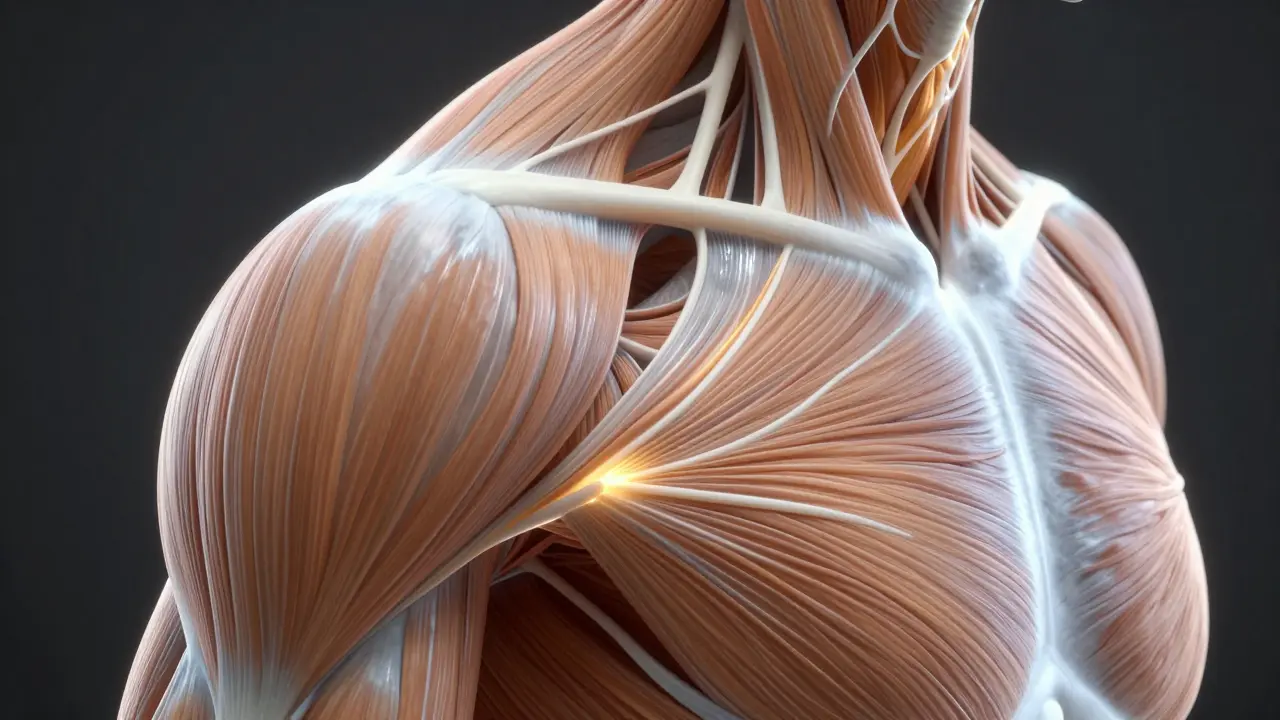
To understand why this works, we have to look at fascia. Fascia is a web of connective tissue that wraps around every muscle and organ in your body. When you're injured or stressed, this tissue can tighten and harden, creating a "restriction." This restriction acts like a tight rubber band, pulling your joints out of alignment and causing pain.
Clinical therapists use myofascial release to stretch and flatten these restrictions. By applying sustained pressure, they force the fascia to rehydrate and expand. This doesn't just feel good; it physically changes the shape of the tissue, allowing the muscle to slide and glide freely again. This is why you might feel a "release" or a popping sensation during a session.
Another key tool is trigger point therapy. A trigger point is a hyper-irritable spot in the muscle that refers pain to another part of the body. For example, a knot in your shoulder might actually be causing the pain you feel in your temple. By applying precise pressure to that specific spot, the therapist "resets" the muscle fiber, stopping the referred pain signal to the brain.
Integrating Massage Into Your Healthcare Plan
Medical massage isn't meant to replace your doctor; it's meant to work with them. The best results happen when you have a multidisciplinary approach. For instance, if you are seeing a chiropractor for spinal alignment, a medical massage therapist can relax the muscles that are pulling your spine out of place. Without the massage, the chiropractor might align the bone, but the tight muscles will just pull it right back into the wrong position within a few hours.
Similarly, it pairs perfectly with Physical Therapy. While a physical therapist focuses on strengthening the muscles and improving movement patterns, the massage therapist prepares the tissue to be worked on. They remove the adhesions and reduce the inflammation, making the strengthening exercises more effective and less painful.
If you're considering this route, start by asking your primary care physician for a referral. This ensures the therapist knows exactly what they are dealing with-whether it's a herniated disc, a torn ligament, or a systemic inflammatory condition. Having a clear medical goal ensures the therapist doesn't accidentally aggravate a condition that requires a different type of care.
Common Pitfalls and What to Watch For
Because this is a clinical treatment, there are some risks if it's done incorrectly. A common mistake is the "no pain, no gain" mentality. While medical massage can be intense, it should never be excruciating. If a therapist is pressing so hard that you can't breathe or your muscles are seizing up in defense, they are actually doing more harm than good. This can lead to bruising or, worse, muscle guarding, where the body tightens even further to protect itself from the perceived attack.
Another issue is the lack of a proper plan. A few sessions might make you feel better, but without a strategy for long-term change, the pain often returns. A good clinical therapist will give you "homework"-stretches or movement patterns to maintain the space they created during the session. If they just rub the area and send you home without advice on how to prevent the knot from returning, you're just treating the symptom, not the cause.
Lastly, be wary of anyone claiming they can "cure" a disease. Medical massage manages symptoms, improves mobility, and supports healing, but it doesn't cure systemic illnesses. It is a powerful tool in the toolkit, but it's not a magic wand.
Does medical massage hurt?
It can be more intense than a relaxation massage. Because it targets deep tissue and trigger points, you may feel some discomfort or "good pain" during the process. However, it should never be unbearable. If you are tensing up or holding your breath, the pressure is too high and is counterproductive to the healing process.
How often should I get a medical massage?
The frequency depends on the severity of the condition. In the acute phase of an injury, you might go once or twice a week to reduce inflammation and break down scar tissue. Once the function is restored and the pain subsides, you may move to a maintenance schedule of once a month or once every few months to prevent the issue from returning.
Is it covered by health insurance?
It depends on your provider and the therapist's credentials. Many insurance companies cover massage if it is prescribed by a doctor and performed by a licensed medical massage therapist or physical therapist. Always check with your insurance company for the specific billing codes they require for reimbursement.
What should I expect during the first session?
Expect a thorough intake process. The therapist will likely ask about your medical history, previous injuries, and current medications. They will perform a physical assessment of your posture and range of motion before touching the affected area. The session will be focused on a specific goal rather than a general full-body experience.
Can medical massage help with arthritis?
Yes, it can be very helpful for managing arthritis symptoms. While it cannot cure the joint degeneration, it can reduce the muscle tension and stiffness that often accompany arthritis. This helps improve joint mobility and reduces the overall pain level, making it easier to perform daily activities.
Next Steps for Your Recovery
If you're dealing with a persistent injury, your first step is to get a formal diagnosis. Whether it's an X-ray or an MRI, knowing exactly what is wrong prevents you from applying the wrong technique to a sensitive area. Once you have a diagnosis, look for a therapist who specializes in clinical or medical bodywork rather than a general spa technician.
When you start your sessions, keep a journal of how you feel for 48 hours after each appointment. It is normal to feel slightly sore, similar to how you feel after a hard workout, but you should notice an overall improvement in your range of motion and a decrease in your baseline pain level over time.
Finally, don't forget the movement. Massage opens the window of opportunity, but movement is what keeps it open. Incorporate the stretches and strengthening exercises your therapist or physical therapist suggests. The combination of soft tissue release and active movement is the gold standard for getting your body back to peak performance.