
Medical Massage for Pain Management: More Than Just Relaxation
 Apr, 26 2026
Most people think of a massage as a luxury-something you book for a spa day to unwind after a stressful month. But there is a massive difference between a relaxing rubdown and a clinical intervention. When we talk about medical massage is a targeted therapy designed to treat specific medical conditions and manage pain through clinical assessment and planned treatment, we are moving away from the "pampering" mindset and into the realm of healthcare. If you have a chronic injury or a condition that keeps you awake at night, a generic full-body massage might feel good for an hour, but it won't fix the underlying issue.
Key Takeaways for Pain Relief
- Medical massage focuses on functional goals rather than general relaxation.
- It requires a clinical assessment to identify the actual source of pain.
- Treatment is often integrated with other medical therapies like physical therapy.
- It targets specific physiological issues like scar tissue, nerve impingement, and muscle atrophy.
What Actually Makes it "Medical"?
The biggest differentiator is the intent. A standard Swedish massage aims to lower cortisol and relax the muscles. A medical massage starts with a goal-like increasing the range of motion in a frozen shoulder or reducing the frequency of migraines. The practitioner doesn't just start rubbing; they analyze your posture, how you move, and where your restrictions are.
To get a real result, the therapist often uses Myofascial Release, which is a specialized technique that applies gentle, sustained pressure into the myofascial connective tissue restrictions to eliminate pain and restore motion. This isn't about "knots" in the way we usually think of them; it's about the fascia, the thin casing of connective tissue that surrounds every organ and muscle. When this tissue gets tight or scarred, it acts like a tight rubber band, pulling your joints out of alignment and causing a ripple effect of pain throughout your body.
Moving Beyond the "Knot" Theory
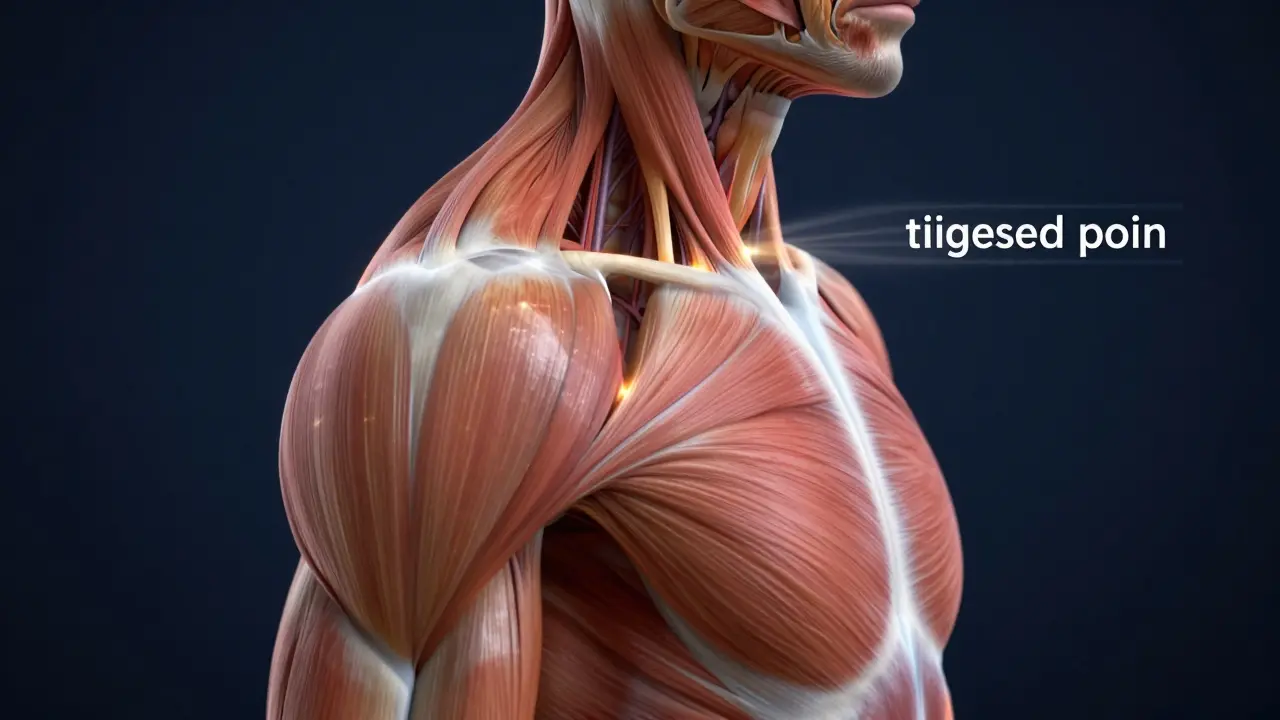
We've all heard the term "muscle knot," but in the clinical world, these are actually Trigger Points. A trigger point is a hyperirritable spot in skeletal muscle that is associated with a hypersensitive spot on the muscle. What's interesting is that the pain isn't always where the trigger point is located. This is called referred pain. For example, a trigger point in your trapezius muscle can actually cause a stabbing pain behind your eye, making you think you have a sinus issue when the problem is actually in your shoulder.
By identifying these specific points, a medical massage therapist can "reset" the muscle. Instead of rubbing the area where it hurts, they find the source. This targeted approach is why medical massage is often used for conditions like Fibromyalgia, a chronic condition characterized by widespread musculoskeletal pain, fatigue, and tenderness. While it can't cure the condition, it manages the systemic tenderness and helps the patient regain a sense of control over their body.
| Feature | Relaxation Massage | Medical Massage |
|---|---|---|
| Primary Goal | Stress reduction / Wellness | Pain reduction / Functional recovery |
| Assessment | General preference check | Postural and orthopedic analysis |
| Technique | Long, gliding strokes | Deep tissue, trigger point, myofascial release |
| Treatment Plan | Single session or sporadic | Structured plan with specific milestones |
| Focus Area | Whole body / General | Targeted anatomical regions |
The Role of Clinical Massage in Chronic Pain
Chronic pain often creates a vicious cycle: you feel pain, so you stop moving; because you stop moving, your muscles tighten and atrophy; because your muscles are tight, you feel more pain. Medical massage breaks this loop. By increasing blood flow and lymphatic drainage, the therapy helps clear out metabolic waste and brings oxygenated blood to damaged tissues.
Consider someone dealing with Sciatica, which is pain that radiates along the path of the sciatic nerve, typically from the lower back down the leg. A standard massage might focus on the leg where it hurts. A medical massage therapist, however, will look at the piriformis muscle in the glutes. If that muscle is compressing the nerve, no amount of leg rubbing will fix the problem. They will apply targeted pressure to the piriformis to release the nerve, addressing the cause rather than the symptom.
This level of specificity is why Physical Therapy and medical massage are such a powerful duo. The therapist prepares the soft tissue, making it more pliable, which then allows the physical therapist to perform corrective exercises more effectively. Without the soft tissue work, you're essentially trying to stretch a piece of old, dry leather-it's more likely to tear than to stretch.
Managing Inflammation and Recovery
Inflammation is the body's way of protecting itself, but when it becomes chronic, it becomes the enemy. Medical massage helps manage this by manipulating the lymphatic system. The Lymphatic System is a network of tissues and organs that help rid the body of toxins and waste. Unlike the heart, the lymphatic system doesn't have a pump; it relies on muscle movement and external pressure to move fluid.
When a therapist uses specific rhythmic strokes, they are essentially acting as a manual pump. This reduces edema (swelling) and allows the body to heal faster after an injury or surgery. For someone recovering from a knee replacement, medical massage can prevent the formation of excessive scar tissue, which would otherwise limit the joint's range of motion and lead to long-term stiffness.
What to Expect During Your First Session
If you're used to falling asleep during a massage, be prepared: medical massage can be intense. It's not always "pleasant" in the moment, but it is productive. You'll likely start with an intake form that asks for your medical history and a visual assessment of how you stand and walk.
- Clinical Interview: The therapist asks exactly where the pain is, what triggers it, and what makes it feel better.
- Palpation: They will feel for adhesions (stuck tissue) and trigger points.
- Targeted Treatment: Using a mix of deep pressure and stretching, they focus on the problem areas.
- Re-evaluation: You'll check your range of motion again to see if the treatment actually moved the needle.
One common pitfall is expecting a "one-and-done" cure. Chronic pain usually takes months or years to develop; it won't vanish in 60 minutes. A professional will set up a treatment plan-perhaps twice a week for a month, followed by a maintenance session every few weeks-to ensure the pain doesn't return as soon as you go back to your old habits.

Integrating Massage into a Wider Health Strategy
Medical massage is most effective when it's one piece of a larger puzzle. If you have chronic neck pain because you stare at a laptop for ten hours a day, the massage will fix the muscle, but your desk setup will break it again tomorrow. This is where ergonomics and behavioral changes come in.
Integrating Neuromuscular Therapy-which is a specialized form of manual therapy that focuses on the nervous system and muscular system to treat chronic pain-allows for a more holistic approach. By combining this with low-impact exercise, like swimming or yoga, you maintain the mobility that the massage creates. The goal is to shift your body from a state of "survival mode," where muscles are constantly guarded and tense, to a state of functional ease.
Does medical massage hurt?
It can be uncomfortable, especially when the therapist is working on a trigger point. However, it should be a "good pain" or a productive intensity. If you feel sharp, stabbing pain or find yourself holding your breath, the pressure is too deep. Communication with your therapist is key to ensuring the treatment remains therapeutic and not traumatic.
How is this different from a deep tissue massage?
Deep tissue massage is a technique that focuses on the deeper layers of muscle. Medical massage is a clinical approach that *uses* deep tissue techniques, along with others, based on a medical diagnosis and a specific treatment goal. Deep tissue is a tool; medical massage is the entire strategy.
How often should I get medical massage for chronic pain?
This depends on the severity of your condition. In an acute phase, you might need sessions once or twice a week. As the pain stabilizes and function returns, you might move to bi-weekly or monthly maintenance. Your therapist should provide a timeline based on your progress.
Can medical massage help with anxiety or depression?
While the focus is on physical pathology, the reduction of chronic pain often leads to an improvement in mental health. Chronic pain is exhausting and can lead to depression. By lowering the pain signals sent to the brain, medical massage can help reduce the overall stress load on your nervous system.
Are there any contraindications for medical massage?
Yes. Certain conditions like deep vein thrombosis (DVT), severe osteoporosis, or recent fractures can make massage dangerous. This is why the initial clinical assessment is so critical-a qualified medical massage therapist will know when to refer you back to a doctor or avoid certain areas entirely.
Next Steps for Your Recovery
If you're ready to move beyond the surface-level relief of a spa day, start by documenting your pain. Note when it happens, what movements trigger it, and where exactly it radiates. This data is gold for a medical massage therapist.
If you are currently seeing a doctor or a physical therapist, ask them for a referral or a specific area of focus they want the therapist to address. When you find a provider, ensure they have a background in clinical anatomy. Don't be afraid to ask them, "What is the physiological cause of this pain, and how will this specific technique address it?" A professional will be happy to explain the mechanics of your recovery.