
How Palliative Massage is Changing the Face of Healthcare
 Feb, 1 2026
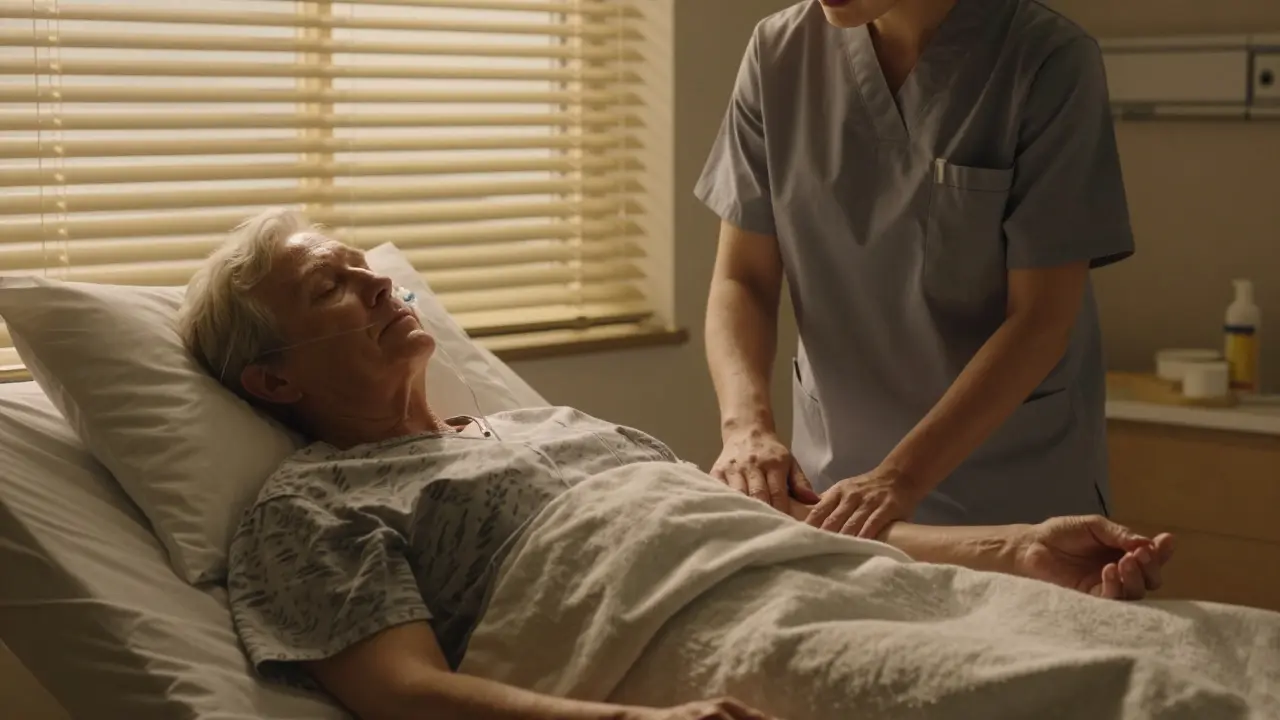
For years, healthcare focused on fixing what was broken. Medications, surgeries, machines - all aimed at curing or extending life. But what about the people who won’t be cured? Those in the final months, weeks, or days of life? That’s where palliative massage steps in - not to heal, but to hold. To comfort. To remind someone they’re still human, even when their body is failing.
What Is Palliative Massage?
Palliative massage isn’t deep tissue, sports therapy, or even your typical spa experience. It’s gentle, slow, and intentional. Trained practitioners use light pressure, long strokes, and warm oils - not to fix pain, but to ease it. The goal isn’t to cure cancer or reverse heart failure. It’s to help someone breathe easier, feel less tense, or simply stop feeling alone.
This isn’t new. Ancient cultures used touch to soothe the dying. But in modern healthcare, it’s only in the last 15 years that hospitals and hospices in places like Australia, the U.S., and the U.K. started formally training staff in this work. Today, palliative massage is part of standard care in over 200 hospice programs across Australia alone.
Why It Works When Medicine Can’t
Medicine can reduce a tumor’s size. It can lower blood pressure. But it can’t always quiet the fear that comes with knowing your time is limited. That’s where touch does what pills can’t.
A 2023 study from Melbourne’s St. Vincent’s Hospital tracked 127 patients receiving weekly palliative massage over six weeks. Those who received the sessions reported a 42% drop in perceived pain, a 38% reduction in anxiety, and 67% said they felt more at peace. Not because their disease changed - but because their body felt safe again.
Touch triggers the parasympathetic nervous system. It slows the heart. Lowers cortisol. Releases oxytocin - the same hormone released when a mother holds her newborn. For someone in constant discomfort, that moment of quiet connection can be the only relief they get all day.
It’s Not Just for the Patient
Many families don’t know what to do when a loved one is dying. They want to help, but feel useless. Holding a hand feels too small. Talking feels like empty words.
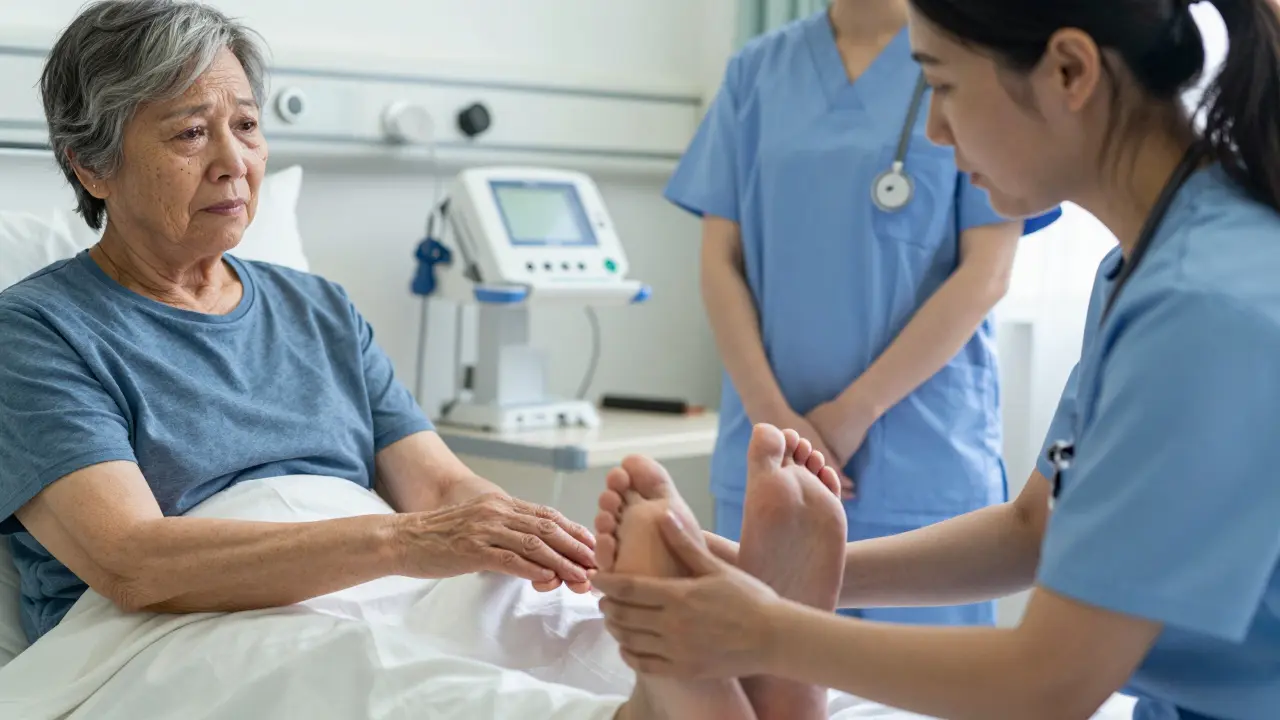
Palliative massage gives them a role. Trained therapists often invite family members to sit beside them, to learn simple strokes - a slow stroke down the arm, a gentle press on the feet. Suddenly, they’re not just observers. They’re participants in care.
In one case, a daughter in Geelong spent 20 minutes massaging her mother’s hands each evening. Her mother had advanced dementia and hadn’t spoken in weeks. One night, she squeezed her daughter’s fingers - the first time in months. The daughter cried. Not because her mother spoke, but because she felt seen.
How It’s Integrated Into Hospitals and Hospices
You won’t find palliative massage on every hospital floor. But where it’s present, it’s structured. In Melbourne’s Calvary Hospital, nurses refer patients to a licensed massage therapist three times a week. Sessions last 20 to 45 minutes. No music. No candles. Just a quiet room, a warm blanket, and a trained hand.
Therapists don’t use essential oils unless the patient requests them. No aromatherapy hype. No spiritual rituals. Just touch, tailored to the body’s needs. For someone with swollen legs, pressure is avoided. For someone with brittle bones, strokes are feather-light. Every movement is guided by the patient’s response - not a protocol.
Some patients can’t speak. Others are too tired to nod. Therapists watch for subtle cues: a sigh, a slight relaxation in the jaw, a deepening breath. That’s the feedback loop. No questionnaire needed.
Who Delivers It - And How They’re Trained
Palliative massage isn’t done by just any massage therapist. These practitioners complete a 120-hour certification program that covers:
- Advanced anatomy for frail bodies
- Managing skin breakdown and pressure sores
- Working with oxygen tubes, IV lines, and feeding tubes
- Understanding the emotional stages of dying
- Boundaries - when to stop, when to sit silently
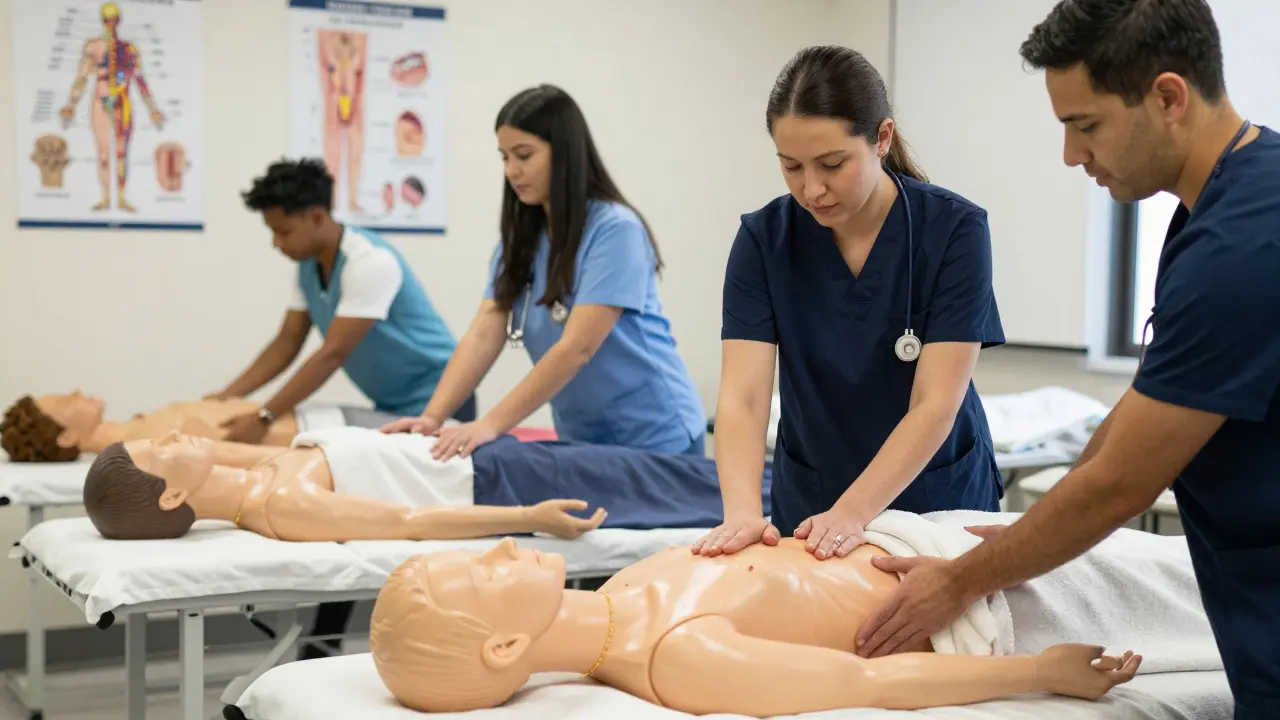
Training includes supervised clinical hours in hospice settings. Many therapists have personal experience - a parent, a friend, a sibling who died. That’s not a requirement, but it’s common. They don’t just know how to touch. They know how to hold space.
In Australia, the Palliative Massage Association sets national standards. Therapists must renew certification every two years. Most work part-time, often volunteering in community hospices. Some are paid by hospitals. Few make a full-time income from it - but they keep doing it anyway.
It’s Not a Luxury. It’s a Right.
Some still see this as “fluffy” care. A nice add-on. But when you’re in pain, and no drug helps - touch becomes medicine. When you’re scared, and no words comfort - presence becomes healing.
The World Health Organization includes touch-based therapies in its guidelines for palliative care. The Australian Commission on Safety and Quality in Health Care now recommends massage as a non-pharmacological intervention for pain and anxiety in end-of-life settings.
And yet, access is uneven. In rural areas, it’s rare. In public hospitals, funding is scarce. Most programs rely on donations or volunteer hours. A patient in a Sydney suburb might get weekly sessions. A patient in Broken Hill might never have one.
This isn’t about luxury. It’s about dignity. Everyone deserves to feel held at the end.
What Comes Next?
Palliative massage is growing. More universities in Australia are adding it to nursing and allied health curriculums. The federal government is funding pilot programs in five regional hospitals. Insurance companies are starting to cover it - slowly.
But real change won’t come from policy alone. It comes from people asking for it. From families saying, “Can someone just hold her hand?” From nurses saying, “I think she’d benefit from a gentle massage.”
When you’re dying, you don’t need another test. You don’t need another drug. You need to know you’re not alone. That’s what palliative massage gives - not a cure, but a connection. And sometimes, that’s enough.
Is palliative massage the same as regular massage?
No. Regular massage focuses on relaxation, muscle relief, or performance. Palliative massage is adapted for people with serious illness. Pressure is lighter, movements are slower, and the goal is comfort, not improvement. Therapists avoid areas with wounds, tubes, or fragile bones. It’s tailored to the body’s limits, not its potential.
Can palliative massage help with nausea or shortness of breath?
Yes. Light touch on the back, shoulders, or feet can activate the parasympathetic nervous system, which helps calm the body’s stress response. This can reduce nausea and slow rapid breathing. It doesn’t eliminate symptoms, but it can make them feel less overwhelming. Many patients report feeling more in control after a session.
Is it safe for someone with cancer?
Absolutely - when done by a trained therapist. Cancer doesn’t spread from touch. In fact, research shows gentle massage can improve circulation and reduce swelling without affecting tumor growth. Therapists avoid direct pressure on tumors or areas with recent radiation. They adjust based on the patient’s condition, not guesswork.
Can family members learn to do it?
Yes. Most hospice programs offer short training sessions for caregivers. You don’t need to be a therapist. Simple techniques - like stroking the forearm or gently massaging the feet - can make a big difference. The key is slow, calm, and attentive. It’s not about doing it right. It’s about being there.
How do I find a palliative massage therapist near me?
Start with your hospital’s palliative care team or local hospice. In Australia, the Palliative Massage Association has a directory of certified practitioners. Some community health centers offer it for free or on a donation basis. If you’re unsure, ask your nurse or GP - they often know who’s available locally.