
Hellerwork Bodywork Therapy: A Complete Guide to Structural Integration
 Apr, 19 2026
What Makes Hellerwork Different?
Most people confuse this with a deep-tissue massage, but the goal is completely different. While a massage aims to relax a muscle, Hellerwork looks at the relationship between your bones and the fascia-the web of connective tissue that wraps around every muscle and organ. If your fascia is tight or "stuck," it pulls your skeleton out of alignment. Think of it like wearing a suit that's two sizes too small; you can't move naturally because the fabric is restricting you. This therapy blends manual bodywork with somatic education. This means you aren't just lying on a table while someone works on you. You're actively learning how to feel your body from the inside out. By combining the physical release of tissue with conscious movement, you stop the "yo-yo effect" where you feel great for a day after a massage only to wake up stiff the next morning.The Core Philosophy of Structural Integration
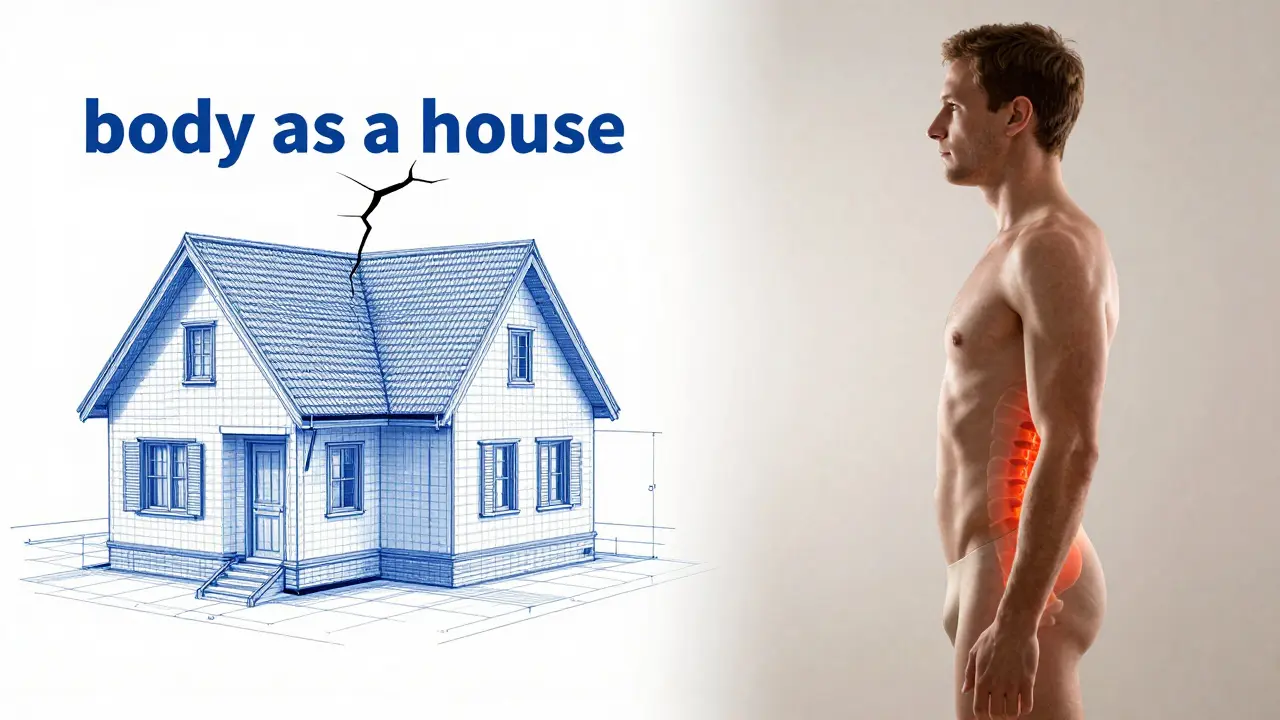
At its heart, this practice is based on Structural Integration. The idea is that your body is a single unit. If you have chronic lower back pain, the root cause might actually be tight hip flexors or a rigid thoracic spine. By addressing the body as a whole, the therapy removes the internal friction that causes wear and tear on your joints. When you experience a Hellerwork session, the practitioner evaluates your posture in three dimensions. They look at how you lean, where you compress, and where you lack support. The goal is to create "space" in the body. When there is space, your internal organs function better, your breathing deepens, and your movements become effortless. It's the difference between walking with a heavy backpack on and walking freely.| Feature | Traditional Massage | Physical Therapy | Hellerwork |
|---|---|---|---|
| Primary Goal | Relaxation / Local Pain Relief | Injury Recovery / Function | Global Alignment / Efficiency |
| Focus Area | Muscles | Joints and Muscle Groups | Fascia and Whole Structure |
| Approach | Passive | Active (Exercises) | Combined (Passive & Active) |
| Long-term Aim | Temporary relief | Return to baseline function | Permanent postural change |
How the Process Actually Works
You don't just walk in and get a "general tune-up." Most practitioners follow a series of sessions designed to unfold the body in a specific order. They don't start with the area that hurts most; instead, they start by creating a stable base.- The Base: Initial sessions often focus on the feet, calves, and pelvis. If your feet aren't grounded, the rest of your spine will never be truly aligned.
- The Core: Once the base is set, the work moves to the torso, ribs, and diaphragm. This is where most of us hold tension from stress, which restricts our breathing.
- The Upper Reach: The final stages address the neck, shoulders, and head, ensuring that the head is balanced atop the spine without straining the upper back.

The Role of Somatic Awareness
One of the biggest mistakes people make with bodywork is treating it like a car wash-you just go in and get "cleaned up." Hellerwork requires you to be a participant. This is where somatic awareness comes in. You'll be asked to notice how your weight shifts on the floor or how your shoulder blade moves when you breathe. Why does this matter? Because your brain has a map of your body. If you've spent ten years slouching over a laptop, your brain thinks that slouch is "normal." Even if a therapist manually fixes your posture, your brain will try to pull you back into that old pattern. By consciously feeling the new alignment, you update the brain's map. You're essentially teaching your nervous system a new, healthier way to exist in space.Who is this Therapy For?
This isn't just for people with chronic injuries. While it's a godsend for those with sciatica or chronic migraines, it's equally valuable for anyone who feels "stuck" in their body. Athletes often use it to break through plateaus because it improves their range of motion and power output. Musicians and artists use it to remove the physical tension that interferes with their creativity. If you've ever felt like you're fighting against your own body-maybe you can't seem to sit still, or you're always leaning to one side-this is for you. It's also highly effective for people recovering from long-term stress. Since the body stores emotional trauma in the fascia (the "emotional memory" of the tissues), releasing these physical knots can sometimes lead to an unexpected emotional release.
What to Expect During Your First Visit
Your first appointment is mostly about assessment. The practitioner won't just ask where it hurts; they'll ask you to stand in a way that feels natural. They'll observe how your pelvis tilts and where your center of gravity lies. You might find that you're leaning 5 degrees to the left without even knowing it. From there, the session begins with a mix of manual pressure and guided movement. You'll likely be asked to move in slow, deliberate ways-reaching for a wall or shifting your weight-while the therapist works on specific points of tension. You should expect to feel a sense of lightness afterward, though some people feel a bit tired, as the body uses a lot of energy to integrate these structural changes.Potential Pitfalls and Things to Consider
Not every bodywork experience is a magic bullet. It's important to know that structural integration is a marathon, not a sprint. If you've spent 40 years ignoring your posture, one session won't fix it. You need a commitment to the full series of work to see permanent results. Additionally, be wary of anyone promising an "instant cure" for complex spinal issues. While this therapy is powerful, it works best when integrated with a healthy lifestyle. If you get a session but then go back to sitting in a curved chair for 10 hours a day without any somatic awareness, you're essentially fighting the process. The real magic happens when the therapy in the clinic meets the awareness in your daily life.Does Hellerwork hurt?
It can be intense, but it shouldn't be excruciating. The goal is a "productive discomfort" where you feel the tissue releasing. If you feel sharp pain, the practitioner should adjust their pressure immediately. The experience is more about deep pressure and stretching than pain.
How many sessions are typically required?
Most structural integration protocols involve a series of 10 to 12 sessions. This is because the body needs to be reorganized systematically from the ground up. While a single session can provide relief, the full series is what creates a lasting change in posture.
Is this covered by insurance?
Coverage varies wildly. Some insurance providers treat it as massage therapy, while others may cover it under physical therapy if a doctor provides a referral. It is always best to check with your provider using the specific CPT codes provided by your practitioner.
How is this different from Rolfing?
Hellerwork is very closely related to Rolfing-both fall under the umbrella of structural integration. However, Hellerwork often emphasizes the somatic education and the client's active participation more heavily, whereas some traditional Rolfing approaches are more focused on the manual manipulation of the fascia.
Can it help with chronic migraines?
Yes, many people find relief from migraines by addressing the tension in the neck and the alignment of the jaw and skull. By reducing the mechanical stress on the upper cervical spine, the frequency and intensity of tension-based headaches often decrease.