
Fire Massage: A Warm Embrace for Your Body and Mind
 Dec, 7 2025
Fire Massage Safety Checker
Is Fire Massage Right For You?
Use this tool to check if fire massage is safe for your health condition. Fire massage requires controlled heat therapy and has important safety considerations.
Imagine a therapist walking barefoot over your back, not to crush it, but to warm it-slowly, deliberately-with glowing embers wrapped in cloth. The heat doesn’t burn. It seeps in like sunlight through winter windows. This isn’t a fantasy. It’s fire massage, an ancient practice still alive in parts of Southeast Asia, Tibet, and now, quietly, in wellness studios from Newcastle to Bali.
What Exactly Is Fire Massage?
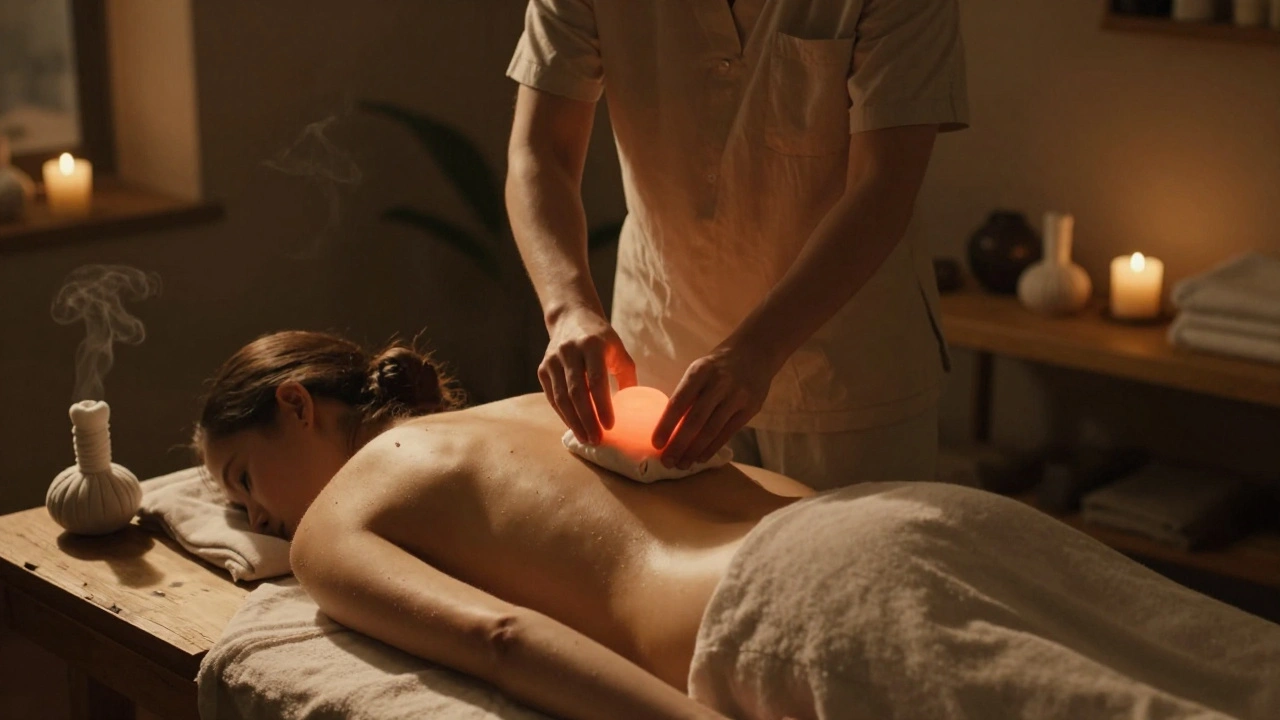
Fire massage, also called flame massage or fire cupping with heat, isn’t about setting skin on fire. It’s about controlled warmth. A therapist uses a cloth soaked in alcohol or herbal oil, lights it briefly, then extinguishes it against the skin-or holds a warm stone, heated over flame, along the spine and muscles. The heat lasts just long enough to relax tissue without scorching it. The result? Deep, penetrating warmth that loosens knots faster than any hot stone or steam room.
Unlike traditional massage that relies on pressure, fire massage works through thermal energy. The heat causes blood vessels to expand, pulling oxygen and nutrients to tired muscles. It also triggers the parasympathetic nervous system-the body’s rest-and-repair mode. That’s why people often feel calm, almost floaty, after a session.
Where Did It Come From?
Fire massage traces back to Tibetan and Mongolian healing traditions, where shamans used fire to drive out illness. In Thailand, it evolved into a spa treatment called fire massage, often paired with herbal compresses. In China, similar techniques were used in TCM clinics to stimulate meridians with heat. These weren’t just rituals-they were practical. Before modern heating pads, fire was the most reliable way to deliver deep warmth to stiff joints and sore backs.
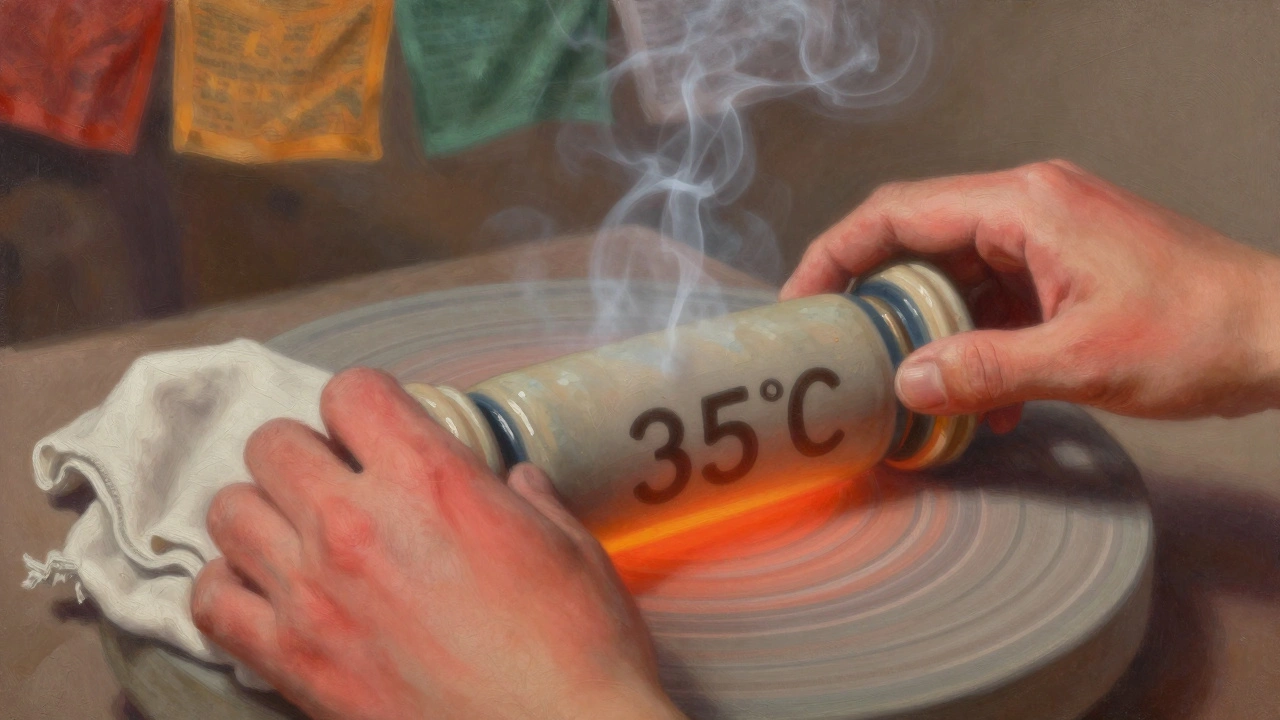
Today, practitioners in Australia, Europe, and North America have refined the method. No more open flames dancing dangerously over skin. Modern fire massage uses alcohol-soaked cloths that burn for less than a second, or ceramic stones heated to 50-60°C (122-140°F). Safety is non-negotiable. A trained therapist never lets the flame touch skin directly. The heat is transferred, never applied.
How Does It Feel?
If you’ve ever stepped out of a sauna into cool air and felt your muscles melt, that’s the closest analogy. But fire massage is more focused. The warmth doesn’t surround you-it travels. You feel it first as a gentle pulse along your spine, then as a slow wave rolling down your shoulders, into your hips, even to your feet.
Some describe it as a “warm hug from inside.” Others say it feels like the tension in their neck has been dissolved by a hot knife through butter. It’s not ticklish. It’s not painful. It’s deeply grounding. Many clients fall asleep during the session. Others cry-not from pain, but from release.
A 2023 study in the Journal of Integrative Therapies tracked 47 people with chronic lower back pain. After three fire massage sessions, 82% reported reduced pain intensity. Half said their sleep improved within days. The researchers noted increased skin temperature at treatment sites-proof the heat penetrated deeper than surface-level warming.
Why It Works: Science Behind the Flame
Heat therapy isn’t new. Ice packs for swelling, heating pads for cramps-these are common. But fire massage delivers heat differently. The rapid, brief bursts of high temperature cause a phenomenon called thermal shock response. Your body reacts by increasing circulation to the area, then maintaining it longer than with steady heat.
This boosts nitric oxide production-a molecule that relaxes blood vessels and reduces inflammation. It also activates heat-shock proteins, which help repair damaged cells. In simple terms: your body thinks it’s under mild stress, so it goes into repair mode.
Unlike electric heating devices, fire massage doesn’t just warm skin. It warms fascia-the connective tissue wrapping every muscle, tendon, and organ. Tight fascia is a hidden cause of chronic pain. Fire massage loosens it without deep pressure, making it ideal for people who can’t handle strong massage.
Who Benefits Most?
Fire massage isn’t for everyone-but it’s perfect for specific groups:
- People with stiff, achy backs-especially from sitting all day or carrying kids.
- Those with poor circulation-cold hands and feet, numbness, slow healing.
- Chronic stress sufferers-the heat signals safety to the nervous system.
- People recovering from injury-when deep tissue work is too much, but movement is needed.
- Those with fibromyalgia or arthritis-gentle heat eases stiffness without aggravating joints.
It’s not recommended for pregnant women, people with open wounds, diabetes (due to reduced sensation), or those with pacemakers. Always check with your doctor if you have a chronic condition.
What to Expect in Your First Session
Your session starts with a short chat. The therapist asks about pain points, injuries, and whether you’re sensitive to heat. You lie face down on a heated table. No oils are used at first-just bare skin.
The therapist lights a cloth soaked in organic alcohol. It flares briefly-blue flame, no smoke-and is pressed gently against your lower back. You feel a quick, intense warmth, then it fades. It’s gone in under two seconds. The same motion repeats along your spine, then down to your glutes and hamstrings.
After the fire passes, the therapist uses warm herbal stones to roll over the same areas. The heat lingers. You might feel a tingling, a deep ache, or nothing at all. That’s normal. The body absorbs heat differently.
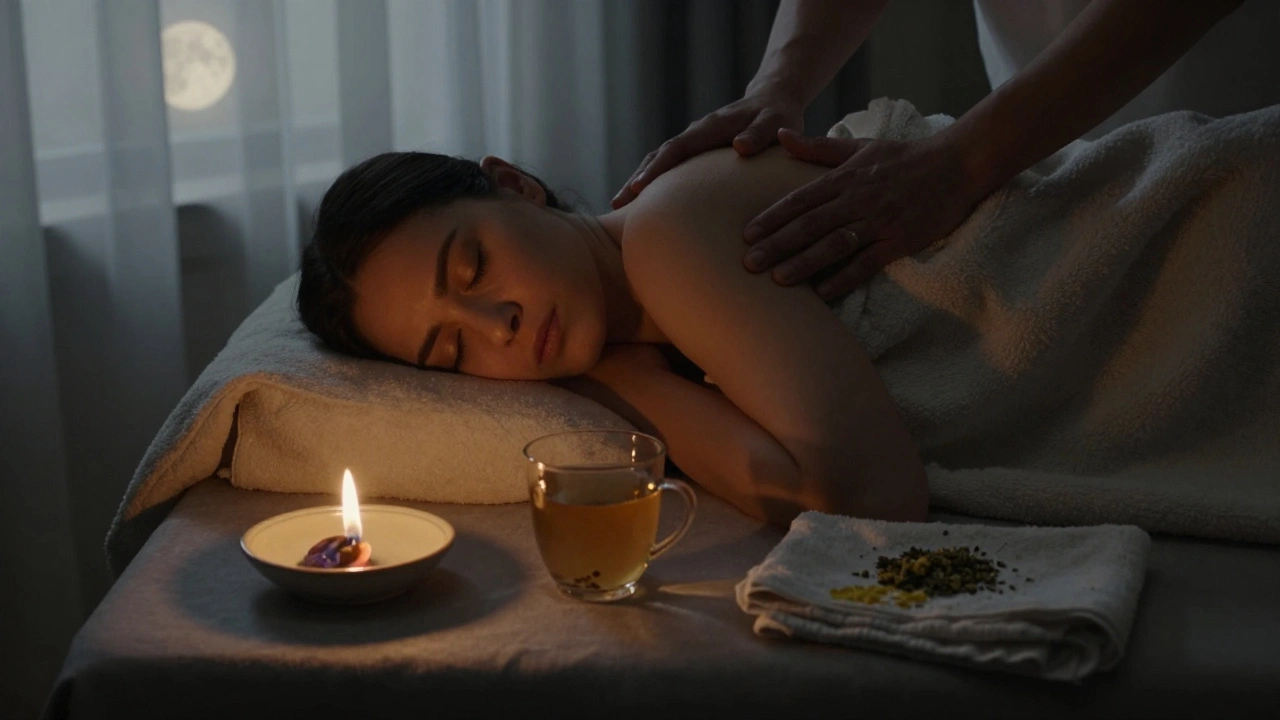
The whole session lasts 45-60 minutes. You’re wrapped in a warm blanket afterward. Many clients drink ginger tea or warm water to help flush out toxins. You’re advised to avoid cold showers or air conditioning for a few hours.
Myths and Misconceptions
Some think fire massage is a gimmick. Others believe it’s dangerous. Let’s clear the air.
- Myth: You’ll get burned. Truth: Trained therapists use flame for less than one second. Burns are extremely rare and usually happen only with untrained practitioners.
- Myth: It’s just a spa trend. Truth: It’s been used for centuries in healing traditions. Modern versions are just safer.
- Myth: You need to believe in energy to feel results. Truth: You don’t need to believe in anything. The heat works physically. Blood flows. Muscles relax. That’s science.
- Myth: It’s only for spiritual people. Truth: People from all backgrounds-athletes, office workers, retirees-report relief. It’s not about belief. It’s about biology.
How to Find a Reputable Practitioner
Not every spa offering “fire massage” is safe. Here’s how to pick wisely:
- Ask if they’re trained in traditional fire massage techniques-not just “flame therapy” they learned online.
- Watch them light the cloth. It should be a quick, controlled motion. No lingering flames.
- They should use organic alcohol or herbal oil, not synthetic chemicals.
- They should explain the process clearly and never rush you.
- Check reviews mentioning safety, not just “it felt nice.”
In Newcastle, studios like Root & Flame and Thermal Haven specialize in this. Both use certified therapists trained in Southeast Asian traditions. Prices range from $85 to $130 per session.
Can You Do It at Home?
Don’t try. Fire massage requires precision. Even a small mistake can cause burns. There are safe alternatives: warm herbal compresses, infrared heat pads, or even a heated rice sock wrapped in a towel. These won’t give you the same rapid thermal shock-but they’re safe for daily use.
If you want the fire effect at home, stick to stones heated in boiling water. Place them on your lower back for 15 minutes. Add a drop of eucalyptus oil to the towel. You’ll still get deep warmth. Just skip the lighter.
Aftercare and Long-Term Use
One session can ease tension for days. But for lasting change, most people do 3-5 sessions over two weeks. After that, monthly maintenance helps.
Drink plenty of water. Avoid alcohol or caffeine right after. Your body is in repair mode. Don’t sabotage it with diuretics.
Some clients report better sleep, fewer headaches, and even improved digestion after consistent sessions. That’s not magic. It’s the result of reduced muscle tension around the spine, which affects nerve signals to your organs.
Fire massage won’t cure disease. But for chronic stiffness, stress, and poor circulation? It’s one of the most effective, natural tools available.
Is fire massage safe for people with sensitive skin?
Yes, if done correctly. The flame doesn’t touch the skin-it’s extinguished before contact. The heat transfers gently through cloth or stone. People with eczema or rosacea often tolerate it better than deep tissue massage because there’s no friction or pressure. Still, always tell your therapist about skin conditions beforehand.
Does fire massage help with anxiety?
Many clients report feeling calmer after a session. The heat activates the parasympathetic nervous system, which slows heart rate and lowers cortisol. It’s not a replacement for therapy or medication, but for mild to moderate anxiety, the deep relaxation it induces can be powerful. Some people schedule it before stressful events-job interviews, exams, or family gatherings.
How often should I get a fire massage?
For acute pain or stress, 2-3 sessions in one week can make a big difference. For maintenance, once a month is enough. If you’re very active or sit at a desk all day, every 2-3 weeks helps keep muscles loose. More than once a week isn’t necessary and may overwhelm your body’s recovery systems.
Can fire massage replace physical therapy?
No. It’s a complementary therapy, not a cure. If you’re recovering from surgery, a herniated disc, or a serious injury, physical therapy is essential. Fire massage can help reduce pain and improve mobility alongside it, but it shouldn’t be your only treatment. Always coordinate with your doctor or physiotherapist.
Why does my skin turn red after a session?
It’s normal. The heat causes temporary vasodilation-your blood vessels widen to bring more blood to the area. This redness fades within 1-2 hours. It’s not a burn. It’s your body’s natural response to warmth. If the redness lasts longer than 24 hours, or if you feel burning or blistering, contact your therapist immediately.
If you’ve been living with stiff shoulders, nagging back pain, or just that constant low-level stress that never quite lifts-fire massage might be the quiet solution you’ve overlooked. It doesn’t promise miracles. But it does offer something rarer: deep, natural warmth that doesn’t just touch your skin-it reaches your nervous system, your muscles, your breath. And sometimes, that’s enough to make you feel human again.