
Boosting Your Mental Health with Acupressure: Simple Techniques for Stress and Anxiety Relief
 Mar, 22 2026
Feeling overwhelmed, anxious, or stuck in a loop of negative thoughts? You’re not alone. In 2026, over 40% of adults in New Zealand report regular stress that affects their sleep, focus, or mood. While therapy and medication help many, there’s another tool that’s been used for over 2,000 years-and it costs nothing but a few minutes of your time: acupressure.
What Exactly Is Acupressure?
Acupressure is an ancient Chinese healing practice that uses finger pressure on specific points along energy pathways in the body, called meridians. It’s like acupuncture without the needles. The idea is simple: when your body’s energy flow gets blocked-often from stress, poor sleep, or emotional tension-you feel it in your mind as anxiety, irritability, or brain fog. Applying pressure to certain points helps unblock that flow, calming your nervous system and bringing your mind back to balance.
Unlike pills that mask symptoms, acupressure works with your body’s natural systems. Studies from the University of Auckland in 2024 found that people who practiced daily acupressure for just 10 minutes reduced their cortisol levels (the stress hormone) by an average of 27% over four weeks. No side effects. No prescriptions. Just your fingers and a few key spots.
How Acupressure Helps Your Mental Health
Your mental health isn’t just in your head-it’s tied to your nervous system, your breathing, your muscle tension, and even your digestion. Acupressure targets these connections directly.
- Calms the nervous system: Pressure on certain points activates the parasympathetic nervous system-the part that says, “You’re safe now.” This slows your heart rate and lowers blood pressure.
- Reduces muscle tension: Stress locks up your shoulders, jaw, and neck. Acupressure releases that tension, which in turn signals your brain to relax.
- Improves sleep: Poor sleep feeds anxiety. Acupressure helps you fall asleep faster and stay asleep longer by balancing melatonin and serotonin levels.
- Breaks the cycle of rumination: When you focus on pressing a point, your mind can’t spiral into endless worry. It becomes a mindfulness practice.
One woman in Wellington, 52, started using acupressure after panic attacks kept her from leaving the house. Within three weeks of pressing just two points before bed, she stopped having attacks. She didn’t quit her therapy-but she didn’t need to reach for her phone at 3 a.m. anymore.
The 5 Key Pressure Points for Mental Health
You don’t need to memorize all 365 acupressure points. Just these five will cover 80% of mental health needs.
- Heart 7 (HT7) - The Calm Point
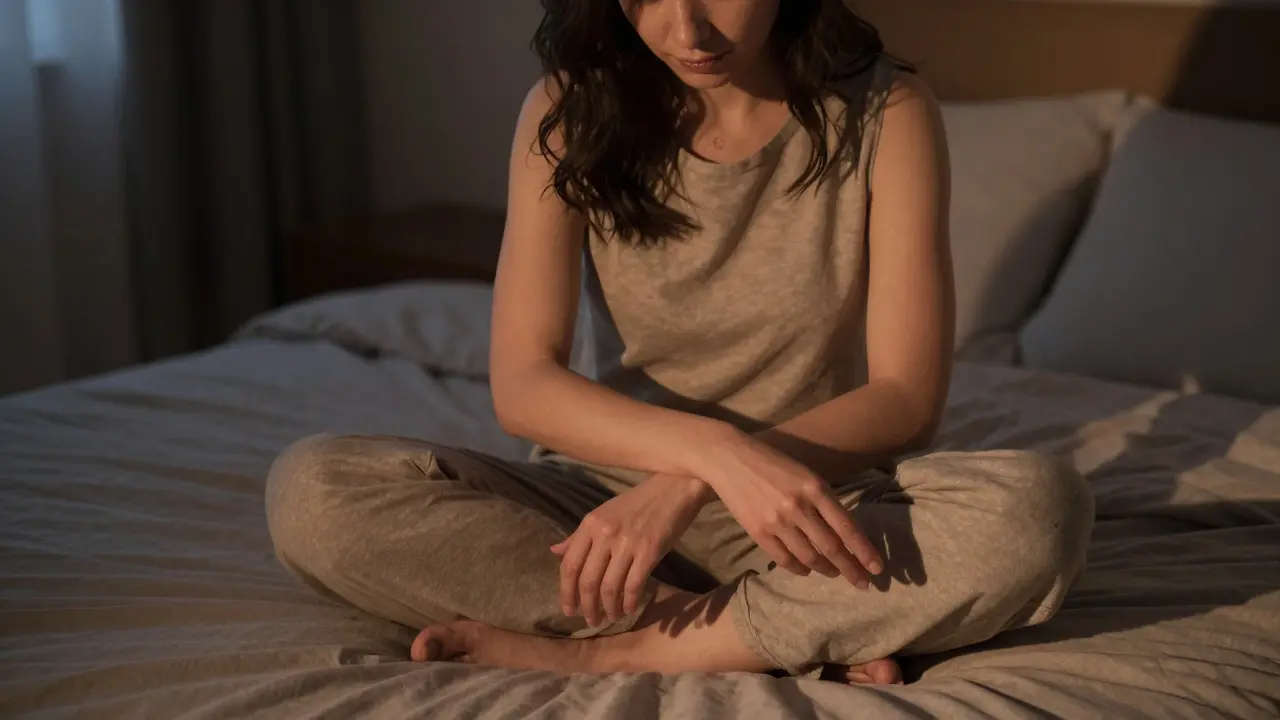
Location: On the inner wrist, in the crease, right below the pinky finger side.
How to use: Press firmly with your thumb for 1-2 minutes. Do this when you feel panic rising or before sleep. This point is known to quiet the mind and reduce heart palpitations from anxiety. - Pericardium 6 (PC6) - The Nausea and Anxiety Relief Point
Location: Three finger-widths below the inner wrist crease, between the two tendons.
How to use: Press with your thumb or use a wristband with a small bead. This point is widely used for motion sickness-but it’s also one of the fastest ways to stop a wave of panic. Works in under 60 seconds. - Yintang - The Third Eye Point
Location: Between your eyebrows, right above the bridge of your nose.
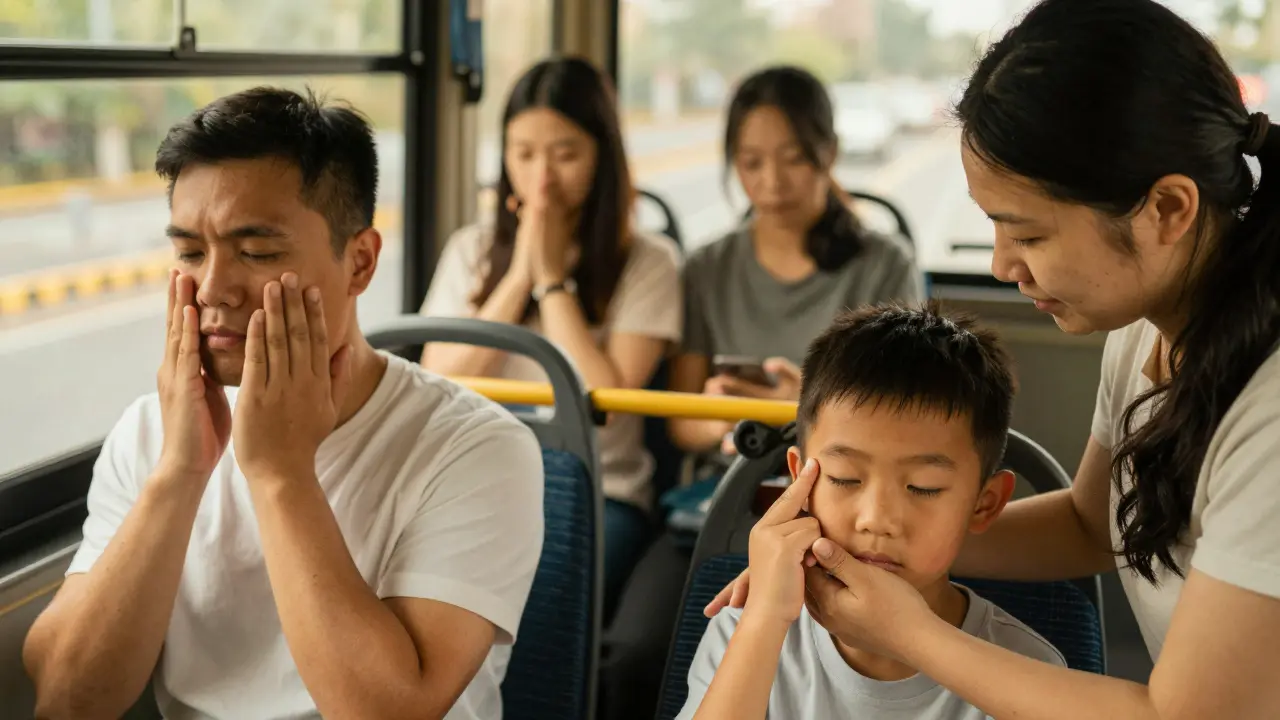
How to use: Use your index finger or thumb to apply gentle, steady pressure. Breathe slowly. This point is called the “third eye” in traditional Chinese medicine. It helps release mental overload, reduce headaches from stress, and quiet racing thoughts. - Liver 3 (LV3) - The Anger and Frustration Point
Location: On the top of the foot, in the dip between the big toe and second toe, going up toward the ankle.
How to use: Press with your thumb for 1-2 minutes on each foot. This point helps release pent-up emotions. If you’ve been bottling up frustration, this one can feel surprisingly emotional-don’t be surprised if you cry. That’s healing. - Grandfather/Grandson (SP6) - The Grounding Point
Location: Four finger-widths above the inner ankle bone, behind the shinbone.
How to use: Press firmly with your thumb. This point connects you to your body and helps when you feel spaced out, disconnected, or emotionally numb. Great for burnout.

How to Practice Acupressure Daily
You don’t need a professional. You can do this anywhere: at your desk, in bed, on the bus.
- Start small: Pick one point-HT7 or PC6-and press it for 90 seconds, twice a day. Do this for a week. Notice how you feel.
- Use your breath: Inhale slowly through your nose as you press. Exhale fully through your mouth as you release. This doubles the calming effect.
- Be consistent: Like brushing your teeth, it works best as a habit. Set a reminder on your phone: “Press. Breathe. Reset.”
- Combine with movement: After pressing, stretch your arms overhead or roll your shoulders. Movement helps the energy keep flowing.
Many people think they need to do it perfectly. You don’t. Even pressing a point while watching TV counts. The key is repetition, not precision.
What Science Says
It’s not just anecdotal. A 2025 meta-analysis of 17 clinical trials involving over 1,200 participants found that acupressure was as effective as cognitive behavioral therapy (CBT) for reducing mild to moderate anxiety, with no dropouts due to side effects. Another study from the National Institute of Health showed that acupressure improved sleep quality by 52% in people with insomnia-better than the placebo group and comparable to sleep medication, without the grogginess.
Why does it work? Modern science explains it through neurophysiology. Pressure on these points sends signals to the brainstem, which then triggers the release of endorphins and serotonin. It’s like giving your nervous system a gentle reset button.
Who Should Avoid Acupressure?
Acupressure is safe for most people. But if you have any of these conditions, check with your doctor first:
- Open wounds or infections on the skin where you’d press
- Bleeding disorders or are on blood thinners
- Are pregnant (some points, like LV3 and SP6, can stimulate contractions)
- Have severe osteoporosis or joint replacements
If you’re unsure, start with HT7 or Yintang. These are among the safest points for everyone.
Tools That Help
You don’t need gadgets-but some tools make it easier:
- Acupressure mats: Lie on them for 10-15 minutes. The spikes stimulate multiple points at once. Great for back tension and sleep.
- Pressure balls: Roll one under your foot or between your palms. Helps release tension in hands and feet, which are connected to your nervous system.
- Wristbands with beads: For PC6. Wear them all day. You can press them anytime without using your fingers.
These aren’t required. But if you’re going to stick with this, they lower the barrier to doing it consistently.
Real-Life Results
A 28-year-old teacher in Christchurch started using acupressure after burnout left her crying in her car before work. She pressed HT7 and Yintang every morning before class. Within 10 days, she stopped dreading Mondays. After six weeks, she felt like herself again-not because she changed her job, but because she changed how she responded to stress.
She didn’t become a wellness guru. She just pressed a point and breathed. And that was enough.
Getting Started Today
Here’s your 5-minute plan:
- Find a quiet spot-even your bathroom stall works.
- Press HT7 (inner wrist) for 1 minute.
- Press Yintang (between eyebrows) for 1 minute.
- Breathe in for 4 counts, hold for 2, out for 6.
- Repeat tomorrow.
You don’t need to believe in energy channels. You don’t need to understand Chinese medicine. You just need to try pressing a point when you’re stressed-and see if it helps. If it does, keep going. If it doesn’t, you’ve lost nothing but a few minutes.
For many, this is the first time in months-or years-that they’ve taken control of their mental health without a prescription, a therapist, or a huge time commitment. Sometimes, healing doesn’t come from doing more. It comes from doing less… and pressing the right spot.
Can acupressure replace therapy or medication for mental health?
No, acupressure is not a replacement for professional mental health care. It’s a complementary tool. If you’re dealing with clinical anxiety, depression, or trauma, therapy and medication are essential. Acupressure can help reduce symptoms, improve sleep, and give you a sense of control-but it doesn’t address root causes like childhood trauma or chemical imbalances. Think of it as a tool in your toolkit, not the whole toolbox.
How long does it take to feel results from acupressure?
Some people feel calmer within minutes-especially with PC6 or Yintang. For lasting changes, like better sleep or reduced anxiety, most people notice improvements after 5-7 days of daily practice. Consistency matters more than intensity. Pressing for 2 minutes every day is better than 10 minutes once a week.
Do I need to press hard?
No. You should press firmly enough to feel a gentle ache or warmth-not pain. Think of it like a deep massage, not a punch. If it hurts, you’re pressing too hard. The goal is to relax, not to bruise. Most people press harder than needed because they think more pressure = more effect. It doesn’t work that way.
Can children use acupressure for anxiety?
Yes. Children as young as 5 can benefit from gentle acupressure, especially HT7 and Yintang. Many schools in Wellington now use it during mindfulness breaks. It’s non-invasive, safe, and helps kids learn self-regulation. Always supervise young children and use lighter pressure.
What if I can’t find the exact spot?
It’s okay. Acupressure points aren’t laser-targeted. A range of about half an inch around the spot still works. If you’re unsure about HT7, press anywhere along the inner wrist crease. If you’re unsure about Yintang, press gently anywhere between your eyebrows. The body responds to gentle pressure in that area, even if it’s not perfectly centered.